

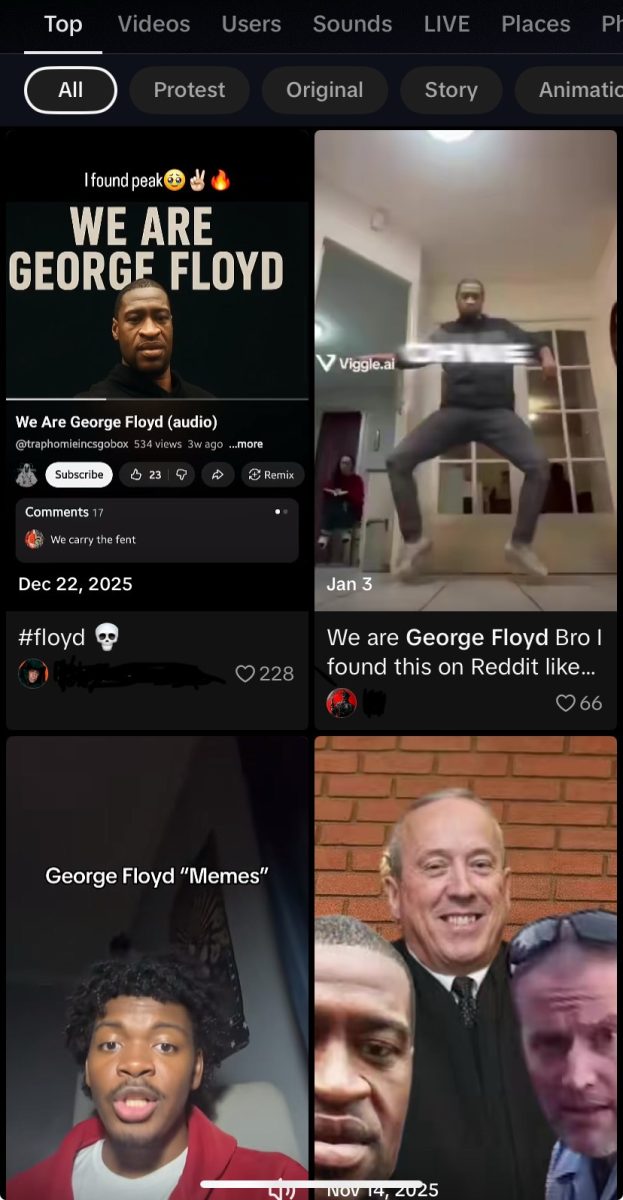
Jokes about tragedy are increasingly common online. Dark humor exists, but has changed over the years with the rise of social media and AI. Cases such as George Floyd’s death, Charlie Kirk’s assassination, and the Sept. 11, 2001, terrorist attack have all been mocked on social media.
Sam Dingman, a DJ for 91.5 KJZZ radio, hosted a discussion about the frequent mocking of Charlie Kirk after his death and how people on the Internet responded to it.
According to Dingman, social media posts mocked Kirk, disagreeing with his outspoken views on race and gender, leading more people to create cruel jokes about them.
Dingman mentioned “Kirkification,” the process “where users post irreverent images with Kirk’s face swapped onto the bodies of random celebrities and public figures, usually as a way of making fun of them.”
For those who posted this type of content online, consequences followed, mainly in the workplace.
¨In the immediate aftermath of Kirk’s death, dozens of people lost their jobs over social media posts where they referred to Kirk’s incendiary positions on race and gender,” Dingman stated in an article posted on the KJZZ website.
According to Julie Exline, a professor in psychological sciences from Case Western Reserve University, repeated exposure to traumatic events can overwhelm people emotionally, leading them to detach rather than empathize. Exline also suggests that when tragedy becomes constant, humor may act as a coping mechanism rather than a sign of indifference,
English teacher Kimberly Whitten, with 36 years of experience, described mockery as an emotional self-protection.
“Instead of feeling something that’s hard to feel, people resort to humor,” Whitten said.
She emphasized that humor can quickly cross ethical lines.
“Sometimes people are really insensitive to the actual people dealing with the tragedy–the survivors and the families–We don’t ever want to dehumanize people,” Whitten said.
Others argue that mockery is less about coping and more about anger.
Junior Angel Rivera feels that tragedy is often mocked when the victim holds controversial opinions.
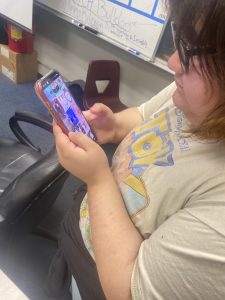
“Sometimes people joke about tragedy because they dislike someone’s opinions and don’t respect them enough to stop, even after they’re dead,” Rivera said. He added that the Internet allows people to express hostility with little accountability, calling it “the easiest way to share your opinion without real-life consequences.”
Senior Adelaide Palacios noted that humor can also stem from shock. “You’re kind of shocked, and you don’t know how to react properly, so you convert it into humor,” Palacios said. She added that platforms like TikTok and Instagram boost the spread of tragic content, making it harder for events to be taken seriously.
Mocking tragedy online happens for many reasons, from doing it out of pure hate to coping with shock, but as long as the nature of social media keeps turning tragedy into viral content, the challenge of balancing free speech with empathy and humor will continue to be challenging.
![Members of this year's prom court after the prom fashion show on April 19 April 19. “The fun part, like homecoming and stuff, that is like the movies, they have prom and stuff, announcing prom queen [and] prom king,” senior Stephanie Perez said.](https://wchsinsight.org/wp-content/uploads/2026/05/40FC9FA0-2E0E-4D8A-A044-BBC0E7A131A0.jpg)




aree trejo • Feb 6, 2026 at 10:42 am
Great story Jacob!!