

CORRECTION: Vasquez was incorrectly attributed as Dominguez in quote 15 and 21.
A man shot 10 times, a woman shot in the head, a journalist arrested for exercising his First Amendment right, a preschooler detained. These are all acts committed by the federal government using the US Immigration and Customs Enforcement (ICE) as a tool to push personal ideologies, such as racism, as public policy. If the public is not angered by the racism that determines U.S. policies, they should fear the authoritarian power Trump is consolidating before it is too late.
President Donald Trump was first elected to office in 2016 and then again in 2024, and while campaigning, he emphasized immigration policies. According to The Marshall Project, a nonprofit news organization, when referring to Mexican immigrants in a 2015 campaign announcement, Trump stated that “They’re bringing drugs, they’re bringing crime, they’re rapists, and some, I assume, are good people.”
Trump also stated on X that “Illegal immigration costs the United States more than 200 billion dollars a year,” implying that undocumented immigrants strain American taxpayers.
However, according to the American Immigration Council, an organization dedicated to educating the public about immigration, “immigrants—including undocumented immigrants—are less likely to commit crimes than the U.S.-born.”
Immigrant advocacy group National Immigration Forum states that undocumented immigrants pay income, property, sales, excise and business taxes, yet “typically have limited or no access to many of the programs they are paying into, such as Social Security, Medicare, and unemployment insurance.”
They also play a key role as consumers, since the estimated “spending or purchasing power of undocumented immigrants was nearly $300 billion in 2023.” Undocumented immigrants are essential in the workforce, making up 45% of the agriculture sector, 14% of the construction sector and 7% of the hospitality sector. They also create job opportunities by starting up businesses that hire workers, such as gas stations, salons, dry cleaners and grocery stores.
Trump has attempted to curtail immigration, yet undocumented immigrants help the country by being a part of the workforce and paying taxes, not amplifying crime or weakening the economy, as he claims.
Trump has constantly made remarks targeting people of color and immigrants. According to The Guardian, a global news organization, Trump spoke about Somalia in December, stating, “They just run around killing each other… I don’t want them in our country.”
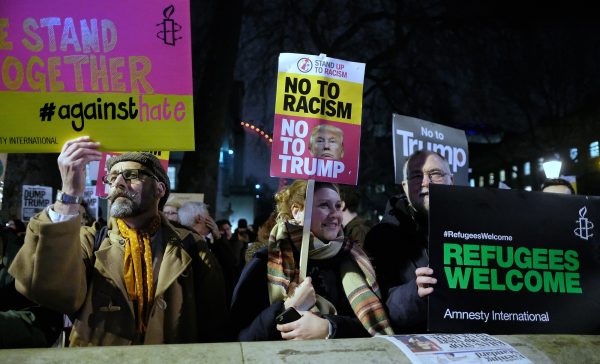
He also stated, “Why is it we only take people from sh*thole countries, right? Why can’t we have some people from Norway, Sweden, just a few?”
According to PBS News, a major American news program, the Trump Administration limited the number of refugees it annually admits from 125,000 under President Joe Biden to 7,500, with most of them being white South Africans. Trump’s argument against immigration is not based on policy and evidence, but rather racist ideology.
Sophomore Emily Castro believes that there’s underlying racism in Trump and ICE’s goal of deporting criminals.
“It’s just a hate crime. They’re just racially profiling, and they’re lying. They don’t see us as humans and they’re just trying to cover it up as, ‘Oh, we’re just arresting criminals,’ or ‘We’re just doing this,’ and that’s just unfair, and they’re just straight up lying about it,” Castro said.
Trump often refers to undocumented immigrants as “criminals” or “illegal aliens.” According to NPR’s Morning Edition, an American radio news program, although the term “illegal aliens” has historically been accepted, “by the ’90s, alien was no longer seen as a neutral term… it had become code for bigotry.”
“I think it’s very gross and inhumane to think of other people as anything other than just another person… And then, I don’t know, it’s just, it’s not fair. You don’t know anything about them, you don’t know their backstory,” junior Raymond Vasquez said.
This is not the first time that the U.S. government has used nationalistic reasoning to detain minorities. During World War II, national fear after the bombing of Pearl Harbor led the federal government to detain people of Japanese ancestry, whether they were immigrants or U.S. citizens.
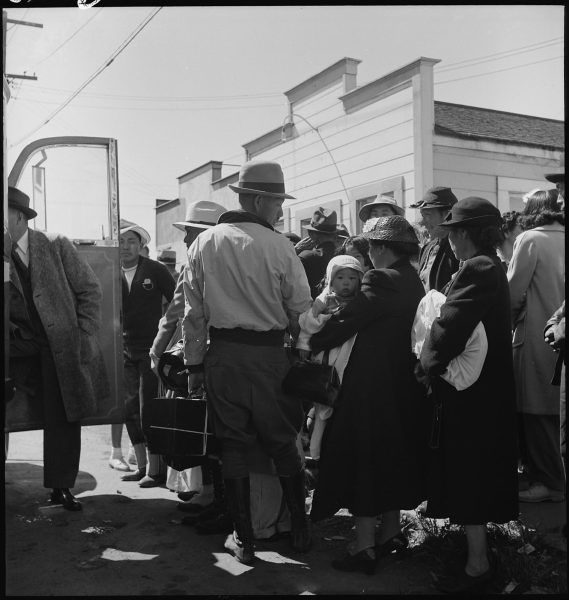
According to Rachel Maddow Presents: Burn Order, a podcast series under the American news channel MS NOW, “the U.S. government invoked the Alien Enemies Act to immediately arrest citizens of the countries we were now officially fighting — citizens of Germany and Italy and Japan — who were here in the United States.”
However, German and Italian immigrants were allowed to apply to become U.S. citizens; Japanese immigrants were not. This creates parallels to the current administration, where race determines eligibility for citizenship.
According to the podcast, General John Dewitt, who oversaw Japanese internment stated, “You needn’t worry about the Italians at all, except in certain cases. Same for the German. But we must worry about the Japanese all the time until he is wiped off the map.” During World War II and the present, nationalistic reasoning is used to detain minorities without due process.
Therefore, “Race would be the sole basis for removing Americans from their homes, putting them on trains, and forcing them into domestic prison camps.” The similarities between ICE raids and the incarceration of people of Japanese ancestry, an act that was widely considered racist, should cause concern.
As a result of ICE raids that have grown in number and violence, undocumented immigrants live in fear. According to the American Immigration Council, when Trump entered office a year ago, about 40,000 people were held in a national network of detention centers on any particular day. One year later, that number grew to 73,000 people, a record number.
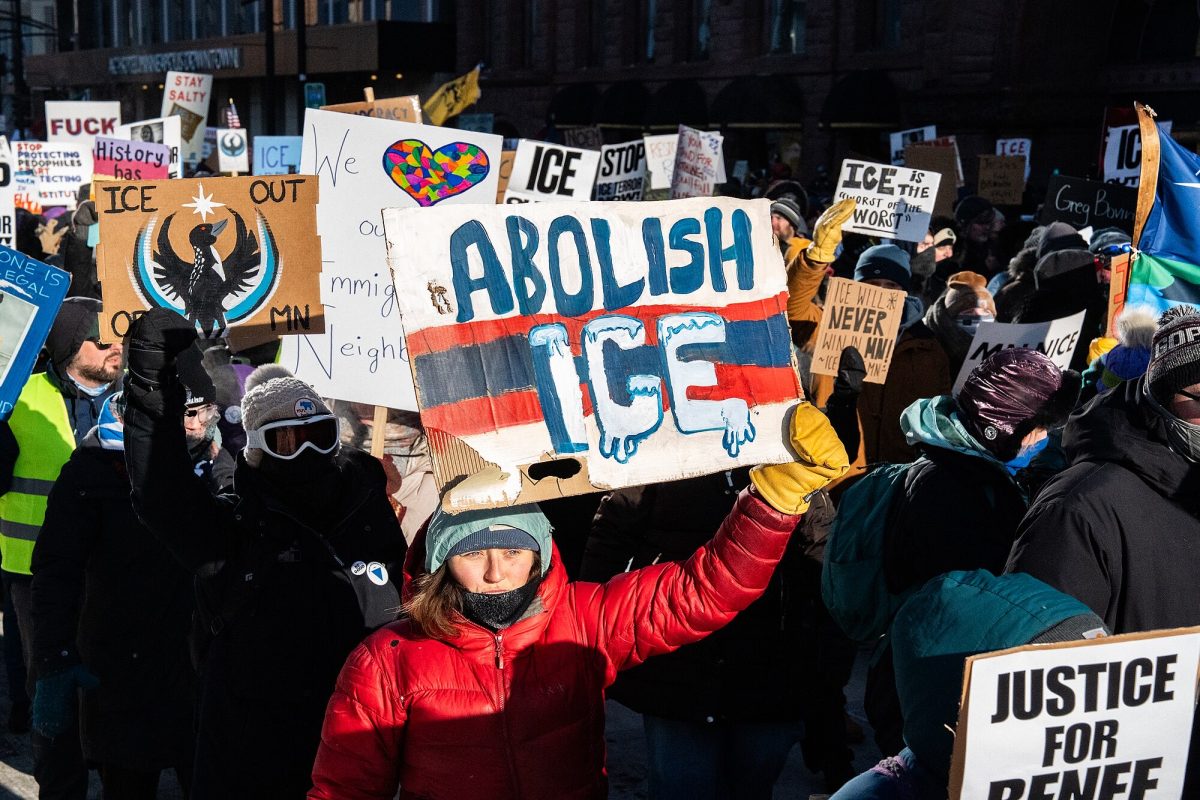
Anti-ICE protests have emerged in cities such as New York, Chicago, Minneapolis, and Los Angeles. People such as Renee Good, Alex Pretti, Geraldo Lunas Campos and Luis Gustavo Núñez Cáceres have been killed in these protests and raids.
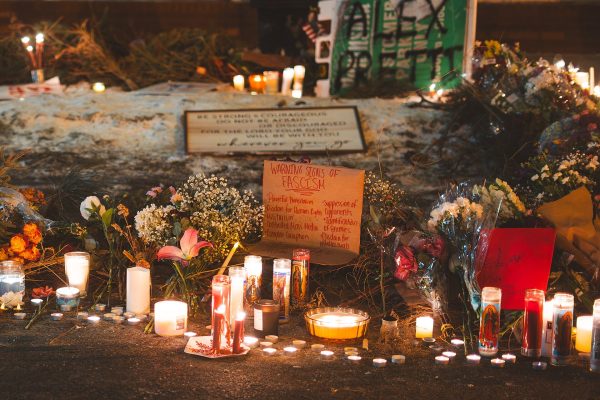
Public outrage peaked after the killings of Renee Good and Alex Pretti. According to The New York Times, Good was shot and killed in her car on Jan. 7 during a confrontation with ICE.
On Jan. 24, Pretti was filming ICE agents with his phone and helping a woman who had been pushed to the ground when ICE tackled him to the ground, removed his gun and shot him 10 times before he died. Ultimately, Pretti, a nurse that cared for veterans, was exercising his Second Amendment rights at a protest. He did not brandish his weapon and was unarmed before being killed, yet he was labeled an “assassin.” This was the breaking point.
“I feel like now you can see everyone’s true colors. So if even despite those kills… if you’re pro-ICE, it doesn’t make you realize what they’re doing is wrong, then that just goes to show what someone’s morals are,” Castro said.
The New York Times highlights the distinct nature of Pretti’s death. Prior to his killing, Minneapolitans had already been protesting Good’s killing and the detaining of preschooler Liam Conejo Ramos.
“I think a lot of people that were kind of pro-ICE have been kind of opened up to it because they weren’t people of color. So they were kind of like, ‘Oh, it’s actually affecting everyone,’” Vasquez said.
Pretti’s death was transformative, and according to The New York Times, reached “into conservative circles that had defended the crackdown, and among independents, who had been willing to look away.”
Historically, conservatives defend the Second Amendment under the argument that “armed citizenry is the last defense against government tyranny,” so now they are expressing their disapproval of ICE.
In another example of oppression, British Broadcast News organization BBC News reported that federal agents arrested former CNN anchor Don Lemon on Jan. 29 for reporting a protest in Minnesota. Trump’s administration charged him with “conspiring to deprive rights and interfering with someone’s religious freedom in a house of worship.” Lemon’s lawyer Abbe Lowell stated that, “This unprecedented attack on the First Amendment and transparent attempt to distract attention from the many crises facing this administration will not stand.”
According to Protect Democracy, a nonpartisan and anti-authoritarian group, scapegoating vulnerable communities, encouraging violence and quashing dissent are some of the tactics authoritarians use to take power and preserve it. Trump continues to scapegoat immigrants, encourage violence against American communities and suppress criticisms; the public should be concerned.
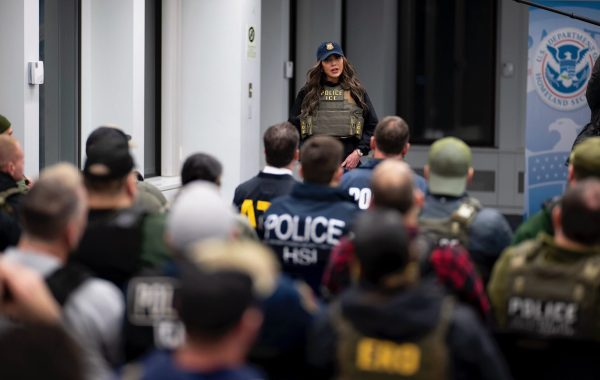
“I feel like this is just, not that this is only step one, but you can see because still nothing has been done, this is just gonna keep continuing if we really don’t do anything about it. I’m really scared that’s it gonna, it’s up to this point and it’s just gonna keep going further from there,” Castro said.
With increased ICE violence, the breaking up of immigrant families and perceived authoritarian control, students across Southern California are protesting. Last year on Feb. 11, WCHS students walked out in protest.
“A lot of people say, ‘Oh, it’s not doing anything. ICE isn’t gonna be scared of some kids walking out of school.’ And, that’s true. They are not gonna be scared of us, but we’re just raising awareness for everybody, and if there’s a reason, or if you have a chance to speak out about something, for good reason, you should,” Vasquez said.
West Covina, Mt. SAC Early College Academy, Charter Oak, and South Hills students are preparing for another walkout on Feb. 27. Principal Charles Park believes student voices must be expressed, but emphasizes student safety.
“I’ve worked at schools where students have left campus, and we can go with you. That happened last year. That happened in schools that I worked at previously. I think the most important thing is the safety of our students, period,” Park said.
He also said that if a walkout is to happen, communication between students and administrators is essential.
“It would be more important that it’s cooperation between myself and the students as opposed to a surprise… So if there’s a student voice, a spokesmember, who is willing to speak to me and say, ‘This is gonna happen on this time,’ then I can organize around it. The safety, that is,” Park said.
Protesting gives the students the voice to express that ICE is the problem, as there are those who fear for their families’ and friends’ safety.
“It’s like personally attacking me, because now I’m scared that I’m gonna get asked questions, especially because they’re not just going against people who are 18 plus, they’re also going towards younger people than that. And also, because my father is an immigrant, so now I’m worried for him every time he goes to work,” Castro said.
The pattern of scapegoating immigrants and attacking their ethnicity suggests that race has a larger influence in the Trump Administration’s immigration policy than protecting U.S. born citizens. Trump continues to polarize and create fear in our communities, while he increasingly consolidates power.
First picture Credits: ICE Protest
Second picture Credits: Trump Protest
Third picture Credits: Japanese Incarceration
Fourth picture Credits: Alex Pretti Memorial
Fifth picture Credits: ICE Raid
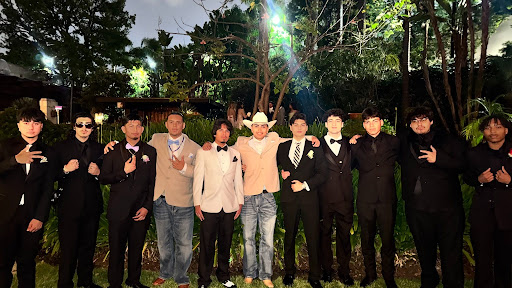
![Members of this year's prom court after the prom fashion show on April 19 April 19. “The fun part, like homecoming and stuff, that is like the movies, they have prom and stuff, announcing prom queen [and] prom king,” senior Stephanie Perez said.](https://wchsinsight.org/wp-content/uploads/2026/05/40FC9FA0-2E0E-4D8A-A044-BBC0E7A131A0.jpg)



.jpg)


