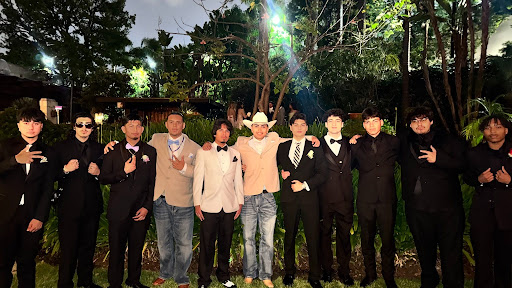
![Members of this year's prom court after the prom fashion show on April 19 April 19. “The fun part, like homecoming and stuff, that is like the movies, they have prom and stuff, announcing prom queen [and] prom king,” senior Stephanie Perez said.](https://wchsinsight.org/wp-content/uploads/2026/05/40FC9FA0-2E0E-4D8A-A044-BBC0E7A131A0.jpg)
Since the 1970s and 80s movies like “Grease” and “Sixteen Candles” have shown high school as a socially divided environment built around popularity, cliques, and stereotypes.
In the popular 2006 film “High School Musical”, the entire school is divided into labels, athletes stick with athletes, theater students stick with theater, and stepping outside of those roles is treated like a disruption of the status quo. The whole story is centered around the idea that you’re expected to stay in your group, and anything outside of that feels abnormal.
This kind of structure shows up frequently in 2000s teen movies, where high school is portrayed as a place with social boxes everyone naturally fits into. With a “normal” high school experience being a stylized experience with rigid social cliques, dramatic love stories and friendships, and house parties, while anything other than that is “abnormal”.
The “normal” high school experience is something most of us have been told exists, but if you actually look beneath it, it isn’t real. Popular media has created this predictable version of teenage life, clear cliques, dramatic love stories, and a social hierarchy that determines the rest of your life. The more we compare ourselves to this curated image of society, the more we could start to feel like we’re doing high school “wrong,” when really, there was never one correct way to experience it.
Frequently, these films rely on stereotypes to make the story easy to understand. In “Mean Girls”, the school is split into exaggerated cliques like “The Plastics” (a popular and attractive group of girls), the athletes and the academic kids, each acting like they exist in totally separate worlds. These categories create the false idea that high school is divided and exclusive. In reality, some would argue that high school is more inclusive.
Challenging the “popular girl” stereotype, prom court princess and senior Stephanie Perez explained that despite the stereotypes often shown in movies, her experience with school social groups has been much more diverse and inclusive.
“At this school, there’s a variety of everyone, my clique, I have a bunch of people that are in different sports, they have different styles, just the way they dress and stuff like that,” Perez said.
Her experience challenges the idea that high school is divided into strict and exclusive social labels often shown in movies. While films tend to separate students into completely different groups based on appearance or interests, Perez’s perspective argues that real-life friendships are more mixed and interconnected. She noted students often interact across activities, interests and personalities rather than staying confined to one social group. Perez also acknowledged that labels and assumptions can still affect students, especially those who are more publicly visible at school.
“Everyone has their opinions and stuff, and it kind of makes you feel boxed, especially when you’re on prom , or people don’t know you, and they just have their opinions on you, and it does make you feel boxed in,” Perez said.
While stereotypes may not define the entire high school experience, they can still influence how students perceive one another. Social labels often are more complicated than movies make them seem; even students viewed as “popular” may feel pressure from assumptions other classmates create about them.
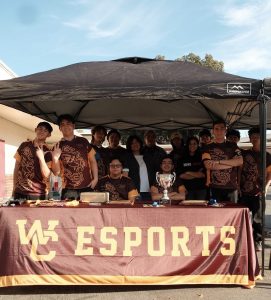
Students often stereotyped as “nerdy” or academically focused also challenged the way high school movies portray students. Esports member and junior Janus Chen explained that movies exaggerate the experiences of students involved in academics or gaming activities.
“I feel it’s very inaccurate, because we people just hang out. There’s no bullying, there’s no parties, there’s nothing,” Chen said.
Chen’s perspective contradicts the dramatic environments often shown in 2000s teen movies, where students involved in academics or activities like Esports are frequently portrayed as isolated, bullied, or excluded from the social scene of high school. Instead, Chen described a more relaxed environment where students interact casually regardless of interests or activities.
Chen also explained that while stereotypes about academic students still exist, they do not carry the same level of division often portrayed in movies.
“I think sometimes, it’s not truly a category, you know, where they get treated different, it’s just like, oh, they do this,” Chen said.
He suggested that although labels like “nerd” or “popular” may exist casually, they no longer explicitly define students socially the way shown in the 2000s movies.
“I feel like our age, it’s way more inclusive because the way we were raised is to include everyone, so I feel everyone is very inclusive nowadays,” Chen said.
While stereotypes still exist in high school, the varied experiences of both Perez and Chen reveal that real-life high school is much more relaxed and inclusive than the version often displayed in the media. Students are not limited to a single label or stereotype, and high school isn’t a movie with organized cliques and dramatic story endings.