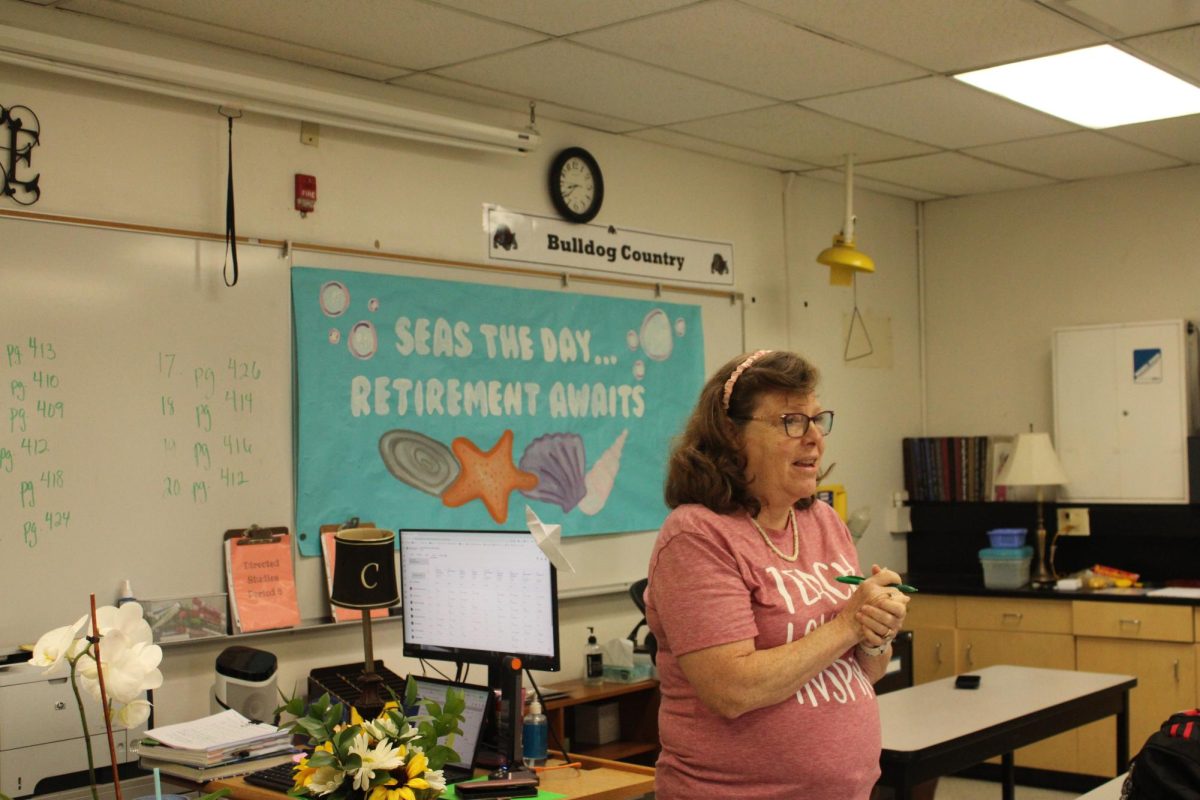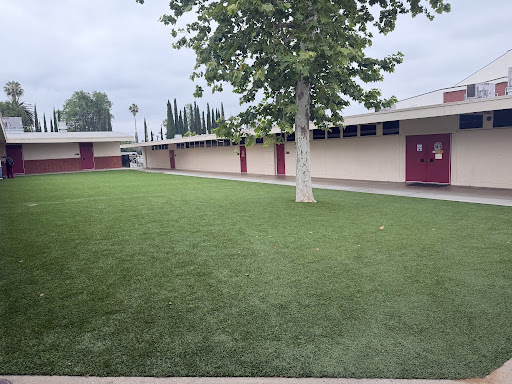
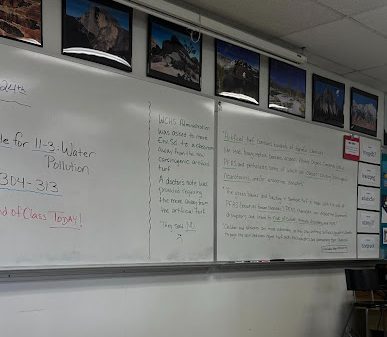
In late April, environmental science teacher Maggie Holland announced to her class on her whiteboard that her cancer had returned. Holland attributed the return of her cancer to a recent turf installation outside of her classroom in E-4. Despite receiving approval from her doctor to move to a new classroom far from the turf, her request was denied by the district. Now, Holland is on medical leave.
On the message left behind by Holland, she cites Beyond Pesticides, a non-profit organization that aims to eliminate the use of harmful pesticides, “’Artificial turf contains hundreds of hazardous chemicals, HED ZONE like lead, heavy metals, benzene, arsenic, Volatile Organic Compounds (IC), PFAS, and phthalates, some of which are cancer-causing (carcinogenic). Neurotoxins, and or endocrine disruptors.”
While there are currently no established studies confirming a direct correlation between cancer and turf, it has been confirmed that some of the materials used to create turf may contain human carcinogens linked to DNA damage and breast cancer.
According to Breast Cancer Prevention Partners (BCPP), a U.S. based science advocacy and policy organization dedicated to eliminating contributing factors of breast cancer, “Many artificial turf chemicals are endocrine disruptors that interfere with estrogen and other hormones that fuel breast cancer development. …PAHs can bind to and alter DNA while mimicking natural estrogens. Studies show women with high PAH levels in their blood are 50% more likely to develop breast cancer.”
However, despite the linkage between carcinogens in turf and cancer, official studies have been considered inconclusive due to the difficulty of other external factors that may also contribute to the development of cancer.
According to the National Institutes of Health (NIH), the primary agency of the U.S. government in charge of biomedical and public health studies, “Numerous studies have shown that chemicals identified in artificial turf, including polycyclic aromatic hydrocarbons (PAHs), phthalates, and per- and polyfluoroalkyl substances (PFAS), are known carcinogens, neurotoxicants, mutagens, and endocrine disruptors. However, few studies have looked directly at health outcomes of exposure to these chemicals in the context of artificial turf.”
Holland’s students have since been left without their teacher. Junior Julian Duran sends his support to Holland while she is away.
“It’s bad for the district for not letting her move back to another class, and this is a serious case. I just sent my prayers over to Ms. Holland because she is a really amazing teacher,” Duran said.
Principal Charles Park was not available for comment at the time of publication.