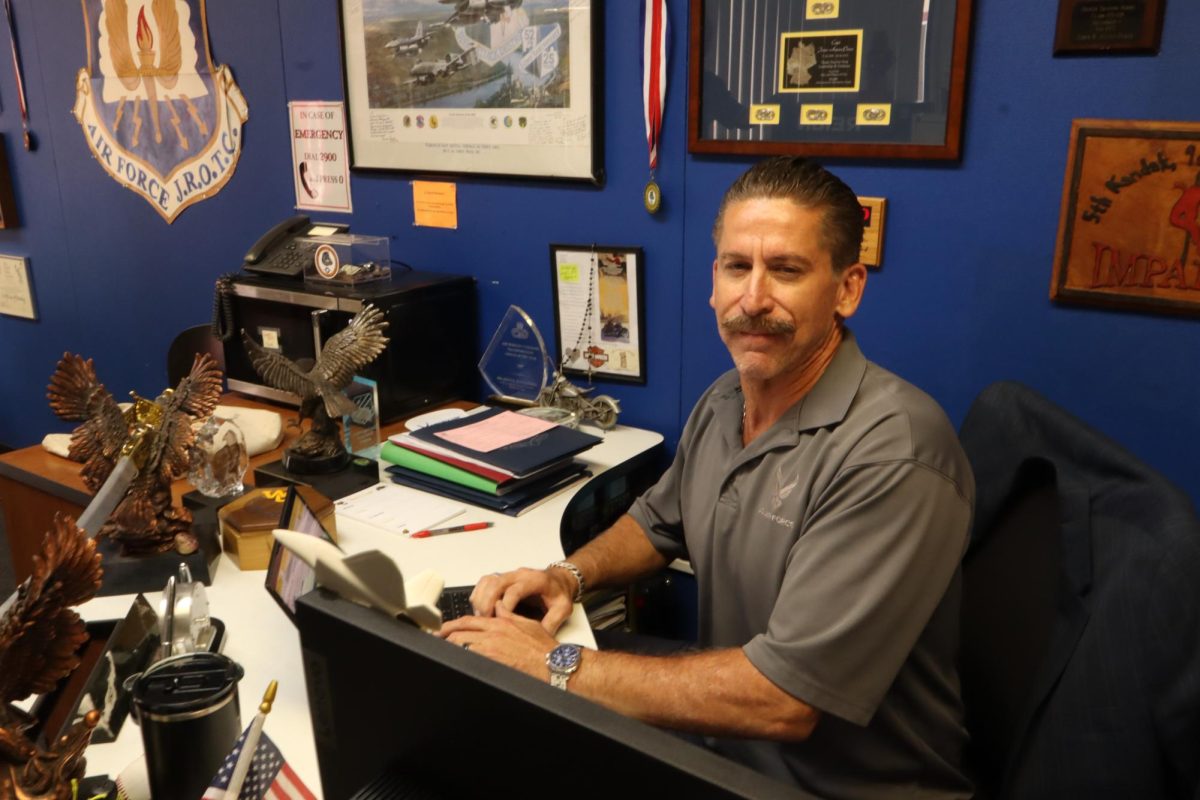
Captain Jesus Acuña-Perez, who oversees the Air Force Junior Reserve Officer Training Corps (AFJROTC) program, will be leaving at the end of the school year after 11 years due to his long commute. Acuña-Perez’s commute to school and back home is around 150 miles, taking from three hours and 15 minutes to four hours each day.
“It would have impacted me anywhere with regards to school, obviously the distance is the driving factor here, but when you couple all of the stressors that come with teaching and that fierce commute, it adds up,” Acuña-Perez said.
Acuña-Perez retired from active duty with his last assignment at California State University, San Bernardino teaching college ROTC. Senior Air Force Leadership contacted Acuña-Perez about a vacant officer position at West Covina High School, but he was already preparing for a career in law enforcement in Chula Vista. Right before Acuña-Perez finalized his move to be a police officer, his field training officer and field training commandant in Mississippi called him about West Covina High School.
Multiple other colonels contacted Acuña-Perez with the same message: check out West Covina High School, so days before his second interview at Chula Vista Police Department, he visited West Covina High School.
“As soon as I met the students, that was it. I was convinced that this was where I needed to be, instead of on the streets of Chula Vista, being a community police officer,” Acuña-Perez said.
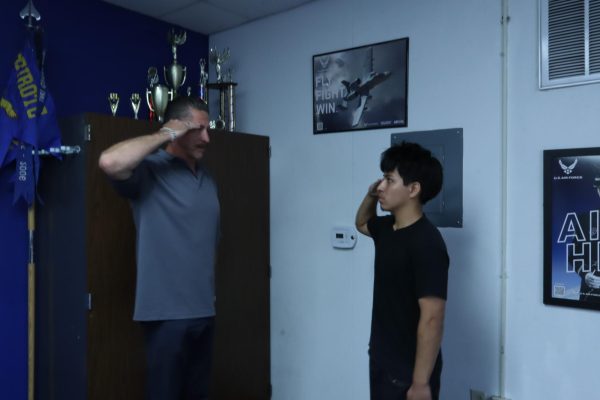
Once Acuña-Perez chose West Covina High School, he had an immediate impact.
In an email to staff, Principal Charles Park stated, “When Capt. Acuna-Perez joined WCHS in April 2015, the AFJROTC program was on probation and at risk of shutdown. Enrollment stood at just 47 cadets, below the 100-cadet viability requirement, and the unit faced significant cultural challenges. Within one academic year, enrollment more than doubled to 104 cadets. The unit successfully passed a rigorous Headquarters evaluation, earning an Exceeds Standards rating and designation as a Distinguished Unit.”
AFJROTC also has many established activities, but certain ones stand out to Acuña-Perez such as the Veterans Day ceremony, where the program organizes an event dedicated to local veterans. ARJROTC also participates in an 18-mile-long Bataan Death March in Chino Hill State Park in May.
“It helps build camaraderie, it helps fortify self-confidence, and it just really helps out in different ways, but I would hope that they would keep all those traditions. And for West Covina High School at large, I would hope that they continue to support our cadets, their leadership development, and their acceptance as part of the West Covina High School Bulldog fabric, because we are an integral part of this institution, and I would hope that it remains that way,” Acuña-Perez said.
Acuña-Perez’s favorite part of teaching AFJROTC is witnessing cadets enter the program in their freshman year, grow and learn, and then graduate in their senior year. He finds it gratifying when his students return to say hello or reach out, since it shows that he was able to influence them.
Acuña-Perez will miss his cadets and his fellow teachers, who he thanks for their support, help and patience. He credits teachers, counselors and administrators for helping the AFJROTC program succeed and he hopes to be remembered for the effort he put into the AFJROTC program.
“I would hope that they don’t forget all the hard work and sacrifice and dedication that I gave this program. I gave it pretty much my all, as one should with anything, and that they keep it going, they keep the spirit of that tough love and holding people accountable. And you know, succeeding and celebrating, and just being positive, keeping those things alive,” Acuña-Perez said.
Captain Acuña-Perez has had a profound impact on the AFJROTC program and the West Covina High School community and will be deeply missed by students and staff.
According to Park, “Capt. Acuna-Perez’s dedication, leadership and care for students have left a lasting mark on our school community. His work not only revitalized a struggling program but elevated it to one of national distinction.”