
The emotional weight of a breakup is something that language rarely captures. It isn’t just the loss of your person, it’s the loss of routine, comfort and the version of the future you may have planned together.
What helps is learning that heartbreak isn’t just emotional, it’s psychological and sometimes physical. Research from the Journal of Neurophysiology shows that breakups activate the same brain regions associated with physical pain, stress and addiction withdrawal.
Understanding this reaction helps frame actions towards healing in the days that follow. Healing doesn’t begin all at once; it starts by acknowledging feelings and giving yourself the space to feel.
Everyday healing looks different. Some days bring clarity, others bring confusions, and some feel like nothing at all. But each day is a step, and this article explores the way healing shifts, stretches, and reshapes itself over 10 days.
Day 1: Acknowledge your emotions
The first day after a breakup may be painful and overwhelming. Emotions may be confusing to understand and can range from sadness to anger, sometimes all at once.
The National Library of Medicine’s (NLM) studies on emotional suppression show that avoiding negative feelings after a breakup is linked with greater emotional distress and rumination (repetitive thoughts focused on the causes and effects of a person’s distress), which means feelings come back stronger and more often than before.
The first instinct after a breakup is to downplay it. People may tell themselves they’re “fine”, they stay busy, distract themselves and avoid confronting their emotions, but it only makes the emotions show up later and stronger.
How to do it:

Permit yourself to feel every emotion. Allow yourself to grieve, leave space for confusion and embrace every feeling of sadness or pain. That may be writing everything down, crying without apologizing or telling one trusted person the truth instead of the polished version.
Set aside time to feel it, so the emotions don’t leak into the rest of your day. Avoid multitasking while processing; don’t scroll, distract and minimize yourself. The goal is to recognize the truth so your mind can process it.
Day 2: Create distance
One of the biggest challenges came from the small digital reminders. Every notification can feel like a personal attack and couples’ TikTok can reopen the wound.
Studies from the NLM, involving social media behavior after breakups, show that repeatedly checking an ex’s posts or profile is associated with higher levels of distress and a slower emotional recovery.
How to do it:
Mute, unfollow or temporarily block – not out of anger, but for peace. Decide in advance what you will do when the urge to check hits, such as writing what you wish you could say on a piece of paper, texting a friend instead or just having a good cry.
Creating friction between impulse and action gives you control back. Distance is not about drama. It’s about giving your mind room to settle.
Day 3: Build a simple routine to fall back on when everything feels unstable
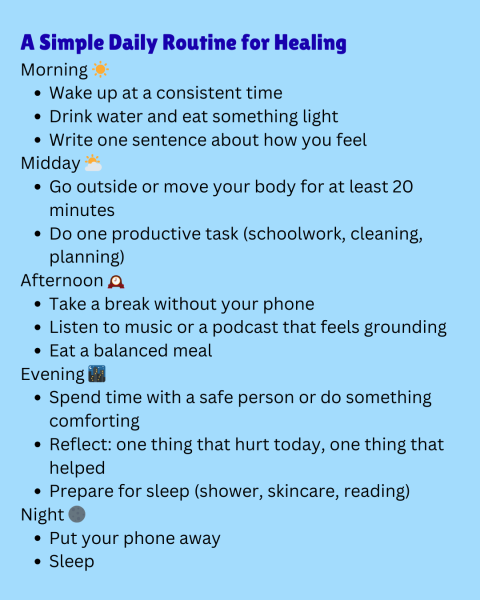
Once the initial shock wears off, it leaves behind a noticeable emptiness. Daily life has been shaped around
another person for so long that the sudden quiet may feel disorienting. The familiar rhythm that once offered comfort is gone.
To fight feelings of emptiness, you can start developing simple routines to ground yourself. Psychologists from the American Psychological Association explain that routines help regulate emotions after stressful or traumatic events by giving your brain predictability and consistency.
How to do it:
Wake up around the same time, eat regularly and go out. Keep your routines simple and repeatable. Choose consistency over intensity. If everything feels overwhelming, focus on the necessities: sleeping, eating and moving. Structure doesn’t have to be perfect to be effective – it just has to exist.
Do one small productive task even if motivation feels absent. Accepting routine does not take away the pain, but it helps you function through it.

Day 4: Move your body to quiet your mind
By this point, the mental noise had become overwhelming, so finding a physical way to quiet the thoughts became a new approach.
Studies from the NLM show that exercise lowers stress hormones like cortisol and increases endorphins, which help improve mood after intense emotional distress.
How to do it:
Walk, stretch, go to the gym and move in any way that feels manageable. Focus less on your performance during the movement and more on presence in the moment. Leave your phone behind and focus on your breathing and surroundings. Movement works best when you allow it to pull you into it rather than letting your thoughts race ahead.
Day 5: Remember the whole relationship (not just the good parts)
Around this time, positive memories may begin to resurface like moments of laughter, shared jokes and genuine warmth. This began to overshadow the accumulated strain of the relationship.
It may seem as though the mind tries to offer comfort by focusing on the positive moments while blurring the more difficult parts of what had actually happened. Familiar memories can easily be replayed, creating the illusion that returning to the past would be simple if given the chance.
The real work became acknowledging the full picture so the lessons could be carried forward without carrying the hurt alongside them.
How to do it:
Write down what worked in the relationship and what didn’t. Not to assign blame, but to stay grounded. However, also be honest with yourself about moments you may have also messed up in the relationship instead of dodging accountability. The purpose is not to invalidate your feelings, but to keep your memory honest.
Missing someone doesn’t mean the relationship was perfect or was right for you. It just means it mattered.
Day 6: Reclaim the parts of yourself that got quiet
Breakups do more than end relationships and friendships. They can quiet your identity. Over time, it became known that a significant part of my identity had been pushed aside to fit within someone else’s boundaries. Reconnecting with myself started to feel necessary, not as a statement, but as a return to authenticity.
The process can involve exploring new forms of self-expression and allowing space for choices that you may previously held back from making. Doing so can be like a quiet affirmation of individuality from anyone else’s expectations.
How to do it:
Start with small but meaningful ways to express yourself. It could be changing your hairstyle, experimenting with new clothes, picking up hobbies you shelved or decorating your space to make it feel truly yours.
Don’t do these things for anyone else, do them because they make you feel seen by the most important person in your life: you. Each act of self-expression is a way to reclaim your identity and remind yourself of the parts of you that never depended on someone else.
Day 7: Let someone else know you’re struggling
Certain details might remain unspoken, held back out of instinct to protect someone even after things had ended.
It becomes clear that full disclosure isn’t required in order to feel comforted. Comfort comes from the people who chooose to be present, those who listen, offer reassurance, and create a sense of safety without needing every detail.
How to do it:
Find at least one person you trust and let them in on how you feel, even if it’s only part of the story. You don’t have to give all the context or explain your choices; simply letting someone know you’re hurting can lighten your emotional load.
Make it clear whether you want advice or someone to just listen. Give yourself permission to step back if it ever feels overwhelming. Lean on your safe spaces; they exist to hold you, not to judge you.
Day 8: Learn your emotional triggers
By this stage, it may not be particular places that stir difficult emotions, it can be the small everyday details. The familiar jokes, certain songs and specific phrases could bring back certain memories with an intensity. Some things may still be too overwhelming to face directly.
It’s okay to honor what certain triggers mean to you while still protecting yourself. You don’t have to erase the past, but need to give your mind space to acknowledge and prepare for the future.
How to do it:
Identify the jokes, songs or small triggers that pull you back into the past. Create new associations or avoid them for a while. You can make a new playlist with songs that feel like your soundtrack, replace it with humor from friends or even write down memories that are bittersweet so they’re contained instead of constantly playing in your head.
Slowly, what once hurt the most will feel less controlling, and you’ll find that your emotional responses start shifting in real time.
Day 9: Don’t expect perfection
Letting go of the expectation of perfection can be difficult. Progress isn’t always steady, and some days feel like a step backward rather than forward.
Initially, this can lead to frustration, especially when healing is sometimes presented as straightforward or predictable. But emotional recovery rarely follows a linear pattern, and holding it to those standards only makes natural ups and downs feel heavier.
How to do it:
Acknowledge that bad moments will happen and healing is never a straight path. Acknowledge that these are not failures. When they hit, pause and take a breath. Notice what triggered the feeling without judging yourself. Say to yourself, “This hurts, and that’s okay.“
Studies from the Self-Compassion Institute show that practicing self-compassion is key and that treating yourself kindly instead of critically improves emotional resilience and helps you bounce back faster. Over time, these setbacks won’t feel like derailments; they’ll just become a part of the process, reminders that healing isn’t textbook and that your progress is measured by persistence rather than perfection.
Day 10: Look forward without expecting or forcing closure
By day 10, not everything might feel fully resolved, and that is okay. The emotional weight of the loss may still be present, but it should no longer control every moment. Moving forward becomes less about forgetting the past and more about acknowledging its significance.
Closure in the way you hope for may never arrive. There may never be a final conversation of a neatly defined ending. Part of healing involves recognizing some uncertainties will remain and that not every one will be answered.
How to do it:
Plan one thing that excites you this week, a new hobby or a day out with your friends. Set goals that aren’t connected to your ex or the relationship. Make them about rediscovering what makes you happy.
Psychologists from the NLM call this forward focus coping, actively shifting attention from loss to meaningful activities and goals. Research shows it helps people regain emotional balance after heartbreak.
Healing doesn’t mean forgetting. It means carrying the experience with intention, letting it inform who you are without defining who you will become.
Conclusion:
Breakups aren’t just about losing someone else; they’re about reclaiming yourself, your identity, and your boundaries. Even when it hurts in the moment, even when it feels unfair or incomplete, sometimes the ending you get is exactly what you need to grow and find the parts of yourself that got quiet along the way.
If you are in the middle of a breakup, know this: you can move forward without forgetting, find joy without erasing your past, and love yourself endlessly. Sometimes the hardest endings lead to the best beginnings you never knew you needed, and that beginning is yours.

![Members of this year's prom court after the prom fashion show on April 19 April 19. “The fun part, like homecoming and stuff, that is like the movies, they have prom and stuff, announcing prom queen [and] prom king,” senior Stephanie Perez said.](https://wchsinsight.org/wp-content/uploads/2026/05/40FC9FA0-2E0E-4D8A-A044-BBC0E7A131A0.jpg)