



12 staff members left West Covina High School at the end of the 2024-2025 school year, the highest number of staff leaving at one time in the last 20 years. The number of departures indicates deeper issues in communication, support and transparency between district personnel, site administration, teachers and students. These staff members include:
- Randy Bell – athletic director
- Sean Guerrero – campus security
- Amy Heilman – counselor
- Jason Heilman – special education teacher, Athletic Leadership Council (ALC) Advisor, volunteer football coach, WCHS alumni
- Sifat Khan – math and AVID teacher, Class of 2025 advisor
- Vickie Mach – math teacher
- Maria Mangini – Spanish teacher
- Avery Mischin – history teacher
- Sharon Pedersen – science teacher
- Henry Tarin – campus security and football coach
- Melanie Wong – assistant principal and former ASB advisor
- Maya Ybarra – math and AP Seminar teacher, former Link Crew advisor
The above helped build and impact the school’s culture of leadership, sports and clubs to make up the community; the number of staff who left is a cause for concern.
According to the article “Does it matter if students experience school as a place of community?” from the American Psychological Association (APA), “feelings of school community also have a profound influence on students’ mental, social, and emotional well-being.”
APA’s mission is to promote the advancement, communication, and application of psychological expertise to benefit society. Students need community in order to succeed in school.
Principal Charles Park believes school culture is formulated through students, teachers, and the parent community, creating a triangulation formed through sports, leadership, clubs, and connection to the teachers and administration is what positively impacts this school.
“I think it’s very important, it’s important to establish an amazing school culture. It’s even more difficult to keep it going,” Park said.
What hurts campus culture is when seasoned teachers who are heavily involved in student life leave. Senior and former Renaissance member Becky Osorio, who also runs cross country and track, and ran for homecoming queen, is concerned about these departures—referring to Wong, who left for Santiago High School in Garden Grove.
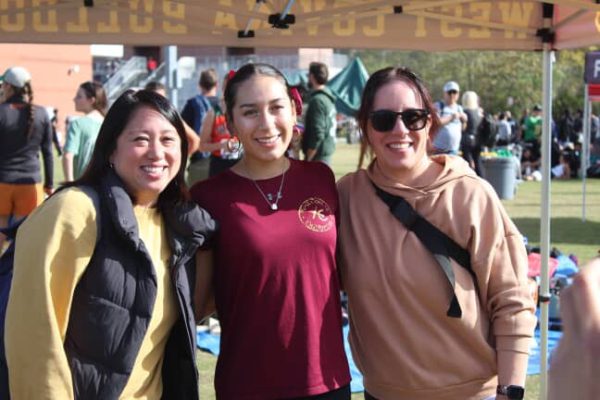
“They’re part of the school. They love this school. Ms. Wong, because she loved this school. She was a part of the school. She wanted to, she really wanted a lot from this school. So I think that’s a big, big change as well,” Osorio said.
Another impact to the student-teacher connection is Howard Lui’s freshman AVID, usually a four-year-long class with the same teacher. However, their time was cut short because the district removed him from the class after a negotiated contract between the district and TAWC (Teacher Association of West Covina) granted special education teachers a case management period, a second conference in addition to one afforded to all teachers.
Jason Heilman transferred to Coronado High School upon his removal as ALC advisor after he also gained a case management period. Assistant Superintendent of Educational Services Denise Knutsen did not respond to questions regarding this change back in June. More details on Heilman’s leave are in this previous Insight article.
According to the Insight article, last year’s ALC students and Heilman formed a petition against the decision.
“‘I had a teacher help me create, like, petition sheets. They’re not gonna do anything. It’s not gonna do anything,’” Heilman stated in the article.
Junior Isla Sangadeo, who’s currently in ALC, feels that while much of the ALC environment remains the same under its new advisor, Michael Maggiore, the program has not fully recovered from Heilman’s leave.
“I think it’s ridiculous what happened and unfair, especially him having just to give up everything right on the spot. And he fought, I know he fought for it, to stay, but the board, or whoever was in charge, they didn’t listen or want to do it,” Sangadeo said.
According to office personnel, 24 students requested to join ALC last year, but only 18 actually joined. This year’s class year would have been Heilman’s biggest ALC group yet.
“A lot of people wanted to be in it because they were under the idea Heilman was going to lead it,” Sangadeo said.
Junior Audrey Acevedo planned to join ALC, but decided not to once Heilman announced he would no longer be the advisor. Acevedo connected with Heilman because her AVID class was right down the hall from his classroom. His outgoing nature was one of the reasons she wanted to join ALC.
“It made me upset, because that was his program and he was one of the main reasons I wanted to join ALC. And it definitely put me off. Because why would I want to join a leadership when the person I thought was going to run the club isn’t,” Acevedo said.
Along with Heilman, the absence of Khan, Ybarra, and Wong opened the gap of the same support to students and negatively impacted them.
Social science department teacher Jeff Garcia also recognized the important roles of teachers, ASB advisor Christine Vo, and former advisor Wong, who provide support for students beyond the classroom.
“The teachers who have been around for a long time, they understand the way that the school functions, the way the school works. And so they all kind of are a part of that, right? So, because the teachers are the one stable thing that pretty much doesn’t change, for the most part, kids come and go, administrators come and go, but the teachers are the ones that are here, and so it’s up to them to kind of keep that culture going,” Garcia said.
A veteran teacher of over 15 years, who wishes to remain anonymous due to fear of retaliation, believes Wong is the staff member who changed the school for the better through her involvement and willingness to be that change.
“Ms. Wong literally makes magic to everything that she touches. Someone who has been a teacher, ASB director, and then decided to be an admin, because she wanted to be that change, was so demoralized that she wanted to leave too,” the veteran teacher said.
It is a concern when Wong, who has over 20 years of experience here and built West Covina leadership, leaves. Site administrators should be aware of this concern and relay it to district personnel.
This same veteran teacher believes that change isn’t happening and moving in the direction that it should be.
“Teachers are just drained, and it’s not changing for the better. I think kids are almost used to just seeing exhausted teachers, like they don’t know any better,” the teacher said.
According to this teacher, the school’s relationship with administrators is like a tug of war because they’re the ones on campus and have more of an immediate impact, not the district, although the district has the “power”.
“They have more of an effect on staff and how we feel, and I think we are absolutely at the lowest morale that I’ve ever seen,” the teacher said.
This teacher also reports that other staff members feel they cannot trust the administration that’s supposed to support them.
“Nobody wants to be a target; we’re already burnt out. So if we say something, you’re putting a target on your back,” the teacher said.
The role of administration is to support teachers, not intimidate them, as alleged by the veteran teacher.
“We could get in trouble, right? It’s kind of like, how am I going to get in trouble when I really, just truly want our school to be back to where it was, how great we were and how spirited we were, and don’t get me wrong, I think, we’re still amazing, our kids are truly amazing. I believe that through and through,” the teacher said.
According to this teacher, there’s a natural hierarchy within the administration, they’re the boss, so staff will have an innate fear of speaking up because they fear retaliation.
“They could lose out on classes they want to teach, and even classes they don’t want to teach,” the teacher said.
Staff should feel comfortable expressing their needs to administration. For any workplace setting to be successful, leaders need to be receptive.
Heilman’s departure and low teacher morale also highlight a disconnect between students and district personnel, who are reportedly unable to see how site changes have affected school culture and community.
“They don’t really pay attention to our school enough or just like separate schools in general, about how their decisions affect our culture,” Acevedo said.
According to the veteran teacher, people only see what the administration presents on Instagram and that is not the full picture.
“I feel like the district Instagram only shines the good stuff that they see. They usually have nothing to do with how good we are. They take credit for everything,” the teacher said.
District personnel and site administrators face a similar issue, the lack of connection and transparency creates a culture of disengagement that contributes to a divide between site leadership and campus staff.
“Admin doesn’t really provide support necessarily. I also think there’s a lot of no transparency, they don’t communicate clearly with things that are happening,” the teacher said.
“People have asked for the budget, and they don’t really get a full, clear , where our money is going and how. I think all stakeholders should know where our money is going, they should be able to decide, right?” the teacher said.
English teacher and TAWC President Erin Reid, suggested that a bridge between teachers and district personnel would help them understand life in the classroom and help to build relationships. This could be the connection between teachers, students and the district, to create a better understanding of one another.
“I think it would be a great policy to have district administration substitute in our classrooms for an entire week, Monday through Friday, just one week, one time a year, kind of like jury duty. They’re just assigned to a classroom and they take it over, and then I think district administration would really see what’s happening in the day to day, because they would be able to live it,” Reid said.
Reid acknowledged it’s not the district administration’s job to create a relationship with teachers because they are not on campus to witness campus life, but site administrators are the eyes and ears of the school and should see the shifts and changes within the school. The connection between the teacher and the district should be made through site administrators.
“I think our site administration, absolutely, will see how things have shifted, but district administration is just too far removed and they have so many other things on their plate that it’s not really their role to focus on individual school culture,” Reid said.
It’s the site administrators’ job to create a relationship with the school and the district, according to the veteran teacher, who also feels that transparency doesn’t exist as compared to previous administrators.
“I don’t know if it’s really transparency from the district or our administration not being transparent, because in previous administrations, we are told about what district decisions are, the admin is more clear about it. I don’t know if that’s a choice that this admin is making or they’re not being told either,” the veteran teacher said.
There is supposed to be a channel of communication between the site administration and the district to better the school, but there is an alleged lack of transparency coming from both directions. According to the veteran teacher, the district wants people to think that a relationship between the students and the district exists, but that’s not always the reality.
“I know district wants people to think, obviously they care, but I think it’s hard for me to see it. I think kids are just a number to them, a dollar sign,” the teacher said.
Besides updates and emails about local-level events, the relationship between the school district and students is minimal. Due to this, certain district decisions, such as the one related to Heilman, are viewed in a negative light.
“I get that he was a special needs teacher and that he needed to focus on that, but at the same time he made the program so it was kind of disrespectful to him to take that away from him when it was something that he built,” Acevedo said.
According to the veteran teacher, they don’t feel like the relationship between the district and the school is connected to the staff and students because site administrators here are not willing to do that.
“I don’t think they’re aware, because I think that would require our admin to make it clear that the staff’s not happy, kids aren’t happy. I don’t think our admin is going to go and tell the district hey, we don’t like these decisions,” the teacher said.
There’s a difference between a staff member who leaves for a school that is closer to home and leaving because they feel unsupported and unable to voice what they need.
“I think there has to be some trust foundationally between staff and admin, and I don’t know if that exists fully right now,” the veteran teacher said.
Ybarra left for Chino Valley Unified School District because it is closer to home and for a higher salary; for example, WCUSD’s column V 20-year salary is $111,225 as compared to CVUSD, which pays their teachers $122,300 in the same group.
While Osorio understands that teachers might leave for financial reasons, it concerns her that more staff members will do so for the same reason.
“They want better resources. They want so much more things within their job, just because they want to have those resources to better influence their children, within their school, and to better themselves as well. I think as a district, they forget about how teachers feel, in a way,” Osorio said.
Garcia recognized the unusually high number of staff leaving and thinks that this is a rare year, as teachers leave for different reasons.
“As a teacher and as a person, you have to do what’s best for yourself, first, as much as you enjoy the school and everything you know, like sometimes you know, a drive that’s a long drive takes up a lot more time where you could be at school, more where you could be doing other things, more involved, or family life or whatever, because we have to balance our lives as well,” Garcia said.
The veteran teacher commented on what they feel is the school district’s position when it comes to supporting teachers.
“The teacher union goes in and asks for things from the district, and we don’t get it. It feels like we’re not valued. What’s the point, you keep gaslighting teachers to say, well, you’re doing it for the kids. I know that I’m doing it for the kids; however, we still need to be valued and supported and feel worthy. The district can’t keep expecting us to keep refilling this empty tank we’re on,” the teacher said.
According to “Battling Corruption in American Public Schools,” Lydia G. Segal, who is an Associate Professor of Business Law and Ethics at Sawyer Business School, Suffolk University, argues that “dedicated teachers and principals become demoralized and eventually leave, draining districts of talent they desperately need.”
The reported demoralization that’s happening in West Covina is what might be pushing vital teachers to leave. The veteran teacher believes that Heilman is one of these vital teachers.
“Heilman graduated (from) here, being an alumni is different, and he felt like he was so unappreciated that he might as well just leave, and he’s been through some stuff and back. There’s always changes in education, but he was so demoralized that he left,” the teacher said.
These site changes don’t just represent change; they represent the loss of a core foundation of staff members in the West Covina High School community. As students, we should not be used to seeing teachers drained due to an alleged system that is supposed to provide support for them. As students, we should feel that we can ask questions and know where and who to ask. A perceived indifference to this reported disconnect shouldn’t be normalized, but questioning why this administration is disconnected should be.
Park declined a follow-up interview on the topic. Assistant Superintendent of Human Resources Michael Seaman also declined to comment. Melanie Wong, Maya Ybarra and Amy Heilman declined to be interviewed.
![Members of this year's prom court after the prom fashion show on April 19 April 19. “The fun part, like homecoming and stuff, that is like the movies, they have prom and stuff, announcing prom queen [and] prom king,” senior Stephanie Perez said.](https://wchsinsight.org/wp-content/uploads/2026/05/40FC9FA0-2E0E-4D8A-A044-BBC0E7A131A0.jpg)




Anonymous • Dec 15, 2025 at 7:44 pm
This was a very insightful article that details the sentiments of many teachers across the entire district. West Covina High School isn’t the only school feeling this impact. Elementary/secondary school teachers, staff and faculty feel this way. The fact that students can see and feel that impact is what the district office should hear at their board meetings. Parents and student have more power and voice than teachers and staff. If students at WCHS Insight were to ask their old teachers (elementary and middle), they would more than likely agree with the teachers who were interviewed but fear retaliation.
Tricia Hess • Dec 14, 2025 at 5:28 pm
It is quite disturbing to see these changes and to be honest, seeing these long time teachers leave really makes you think as a parent if you want your child to attend there. I was an alumni and I grew up with Heilman and the staff needs to understand that alumni are now the parents who are deciding on sending their kids there. Do you really want to piss off your alumni? We are calling the shots on where are kids are going now and have power to change how people view the school