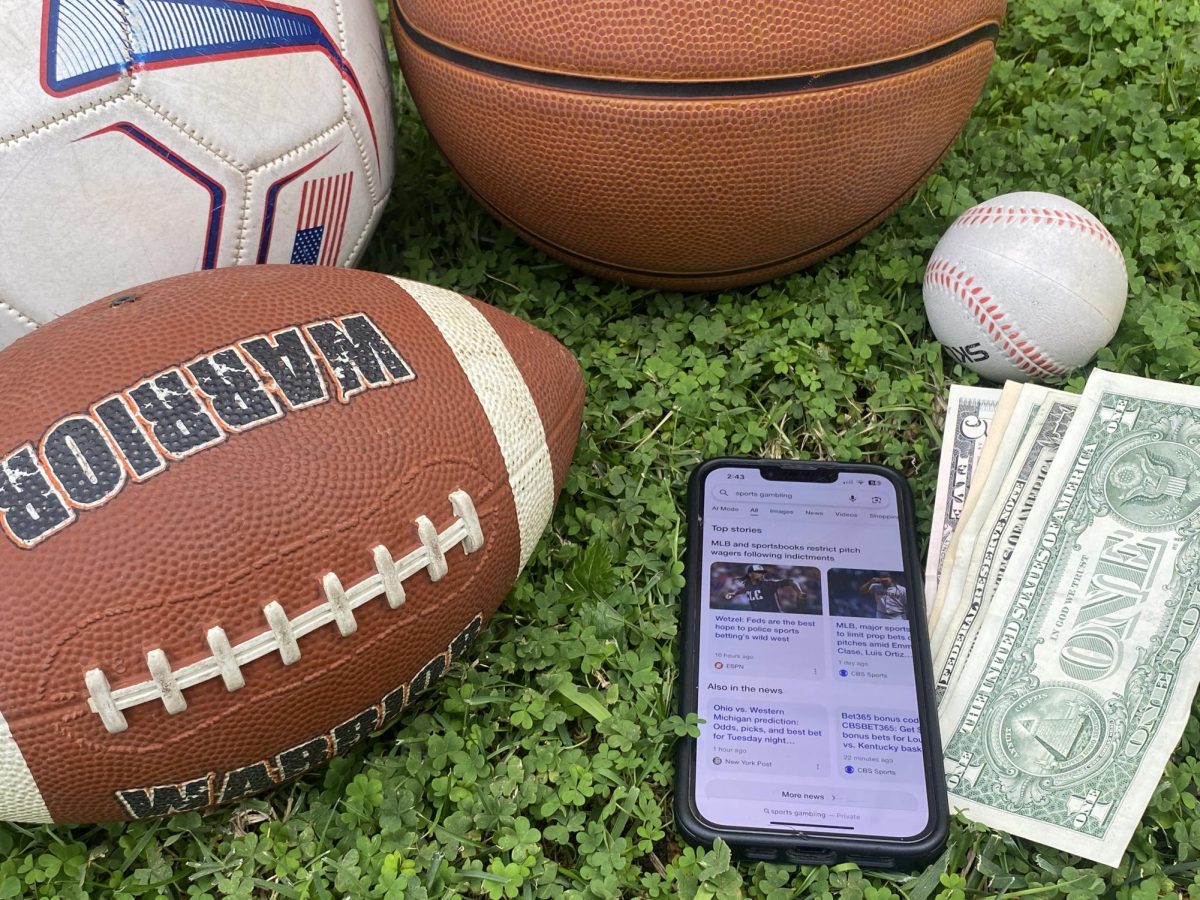
Betting is considered a specific type of gambling and commonly seen in sports like the National Football League (NFL), the National Basketball Association (NBA) and Major League Baseball (MLB). In California, all forms of traditional sports betting are illegal, either online, mobile or in-person at casinos or card rooms, but have adverse effects.
Sports betting was made illegal in all states by the Professional and Amateur Sports Protection Act (PASPA), also known as the Bradley Act, was enacted to protect the integrity of sports, and was signed into law on Oct. 28, 1992 by President George H.W. Bush.
It officially became effective on Jan. 1, 1993, except for a few states who already had a form of sports betting, according to LV Criminal Defense, a Las Vegas Criminal Defense firm founded in 2015.
The reason why sports betting was made illegal in the first place is “because league officials and owners argued that giving up control to states could harm public trust, game integrity and regulatory consistency,” according to NXTbets, a platform for real-time insights, information, and entertainment around betting.
This means, if league officials and owners lost control over what their athletes gamble on and who their fans gamble on, it could harm the play of the game and players.
According to USA TODAY, a national and international news outlet, on May 14, 2018 the U.S. Supreme Court declared PASPA unconstitutional and “stated that Congress could regulate sports gambling directly, but it cannot force states to maintain their own laws banning it.”
This opened up sports betting online and in retail locations in 38 states, although in California, traditional sports betting is still illegal.

Senior Christine Walker, on the girls’ basketball team, is knowledgeable about the quality of other players’ play and how it might affect them when betting is involved.
“People are betting on them, so it makes it just in a way, it puts pressure on them,” Walker said.
On the other hand, senior Ike DeVance in the boys’ basketball team, sparks a separate reaction from Walker on how sports betting affects athletes.
“I know people get caught and end up losing their job and everything they work hard for … It just proves to people that think that the NBA is rigged, so it’s just helping with the haters,” DeVance said.
Although sports betting isn’t exclusively in the NBA, the NFL has a stricter but similar sports betting policy among its team players.
According to AP News “NFL reminds players of league gambling policy in light of federal indictments,” the NFL management council wrote in a memo “‘We all have a responsibility to protect the integrity of the Shield by ensuring that our game is played fairly, honestly and to the best of a player’s ability,’ … ‘NFL players must also take appropriate steps to safeguard the game against gambling-related risks that may undermine the confidence and trust of the fans.'”
These gambling-related risks are not easy to avoid, especially for people who are big fans of any sport, but when it comes to advertising, it opens a window towards addictive gambling.

“‘The fact that it’s normalized, the advertising is aggressive, it’s available 24/7, the micro bets — all of this is adding up to tremendous increase in usage across individuals,'” according to Wayne Taylor, a professor of marketing at Southern Methodist University, interviewed in an article by AP News.
If California decided to legalize sports betting, sophomore Anahy Hurtado, in the girls’ swim and water polo team, would add safety measures for the issue of addictive gambling and create a stable market.
“I think they could put a limit on how much people can bet and how many times they can bet, because, addictive gambling normally takes place when it’s like somebody wants to do it over and over again, rather than how much money they’re actually putting into the gambling. So maybe just setting a limit on how much you can gamble rather than how much money you place into it, can maybe help regulate the addiction to it,” Hurtado said.
However, recklessnesses like addiction, bankruptcy, severe financial or legal problems, and even imprisonment could occur without rigorous gambling regulations. Therefore, many people like DeVance believe the considerably safer option would be to not legalize sports gambling at all.
“Personally, I feel like there is no legalizing it, because you’re just damaging the game, like people are just gonna play for their own benefit, not for the actual sport of the game. So in my opinion, I don’t see any way they could do it,” DeVance said.
One way or another, any form of gambling is risky enough to get out of hand and it risks the team players’ jobs, and affects the actual potential of what could be of the game, which is why sports gambling should remain illegal, or at least cautiously directed in the state of California.

![Members of this year's prom court after the prom fashion show on April 19 April 19. “The fun part, like homecoming and stuff, that is like the movies, they have prom and stuff, announcing prom queen [and] prom king,” senior Stephanie Perez said.](https://wchsinsight.org/wp-content/uploads/2026/05/40FC9FA0-2E0E-4D8A-A044-BBC0E7A131A0.jpg)