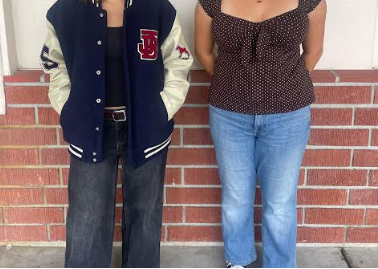
Thrifting second-hand clothes has become a popular trend amongst students because of social media influence and the ability to find unique or rare items not found in fast fashion stores. With groups like Thrift Club and the Theater’s second-hand clothing donations, more students recognize the importance of thrifting. According to a sustainable guide to thrifting, an article by the Environmental Center of the University of Colorado, thrifting can ensure that less clothing makes it to landfills. With fewer clothes in landfills, there would be less pollution and better conservation of resources.
Along with a positive impact on the environment, thrifting also has a positive impact on people’s wallets. Thrift stores’ productions are less demanding than fast fashion stores because they require minimal transportation and the clothes are donated instead of bought. According to a research article from City Thrift, Thrift Shopping vs. Fast Fashion: Environmental Impact, thrifting extends the life of clothing items, which can save money and energy when buying and making products.
According to a research article from Earth.org, The Environmental Impact of Fast Fashion, Explained, fast fashion is the production of inexpensive, trendy clothes, which makes it easily accessible to consumers. These items can take either a few days or weeks to produce and focus on the low cost, which encourages consumers to purchase more.
Even though thrifting is becoming more popular, people still shop at fast fashion stores, such as H&M, Zara and Shein. While shopping at these places may be easier for some people, there are harmful effects when buying fast fashion. Also according to Earth.org, fast fashion items produce 35% of all microplastics found in the ocean. These companies use materials like polyester and nylon, which can take hundreds of years to decompose. This results in excessive amounts of waste left in landfills and the ocean.
Senior Jamielyn Cabrera likes both thrifting and buying fast fashion, but she likes how thrifting can be more beneficial to the environment.
“Yeah, it’s better for the environment because in fast fashion, there’s like, companies and stuff that are inhumane towards people,” Cabrera said.
Fast fashion industries lead to negative effects on the workers in the clothing fa
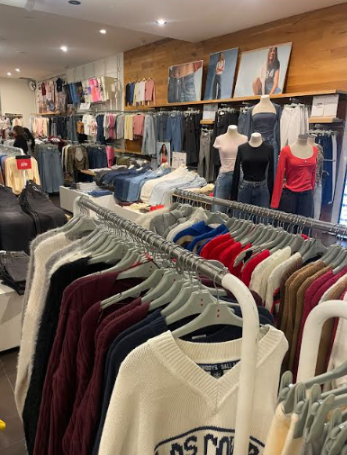
ctories because they endure poor working conditions, long working hours and a bad posture due to prolonged sitting. According to a research article from the National Library of Medicine, workers are exposed to dust particles from raw materials and chemicals used during the dyeing process from manufacturing machines that can lead to respiratory diseases if exposed to for long periods of time. Even consumers get warnings about these chemicals, from groups like the Center for Environmental Health (CEH), for just wearing items produced in these factories. Factory workers may also suffer from the severe pressure of continuous workloads for over eight hours a day, which can impact their mental health and produce anxiety and depression. According to research articles from the National Library of Medicine, workers may also suffer from respiratory problems and musculoskeletal disorders, which can leave long-term effects on their health, like a chronic respiratory disease or a partial or total loss of movement in the muscles.
Thrift shopping avoids these effects; affordable shopping options lead to thrift stores lessening the need for new clothes, which then lessens the need for clothing production. According to the research article Thrift Shopping vs. Fast Fashion: Environmental Impact, thrift stores reduce carbon emissions, which is the release of carbon dioxide into the atmosphere, by 90%, which minimizes the harm done to the environment. To do this, thrifting avoids the energy-consuming production of new clothes and lowers waste emissions. Thrifting also creates a sense of positive change within the community and can encourage people to become more conscious of their consumption patterns.
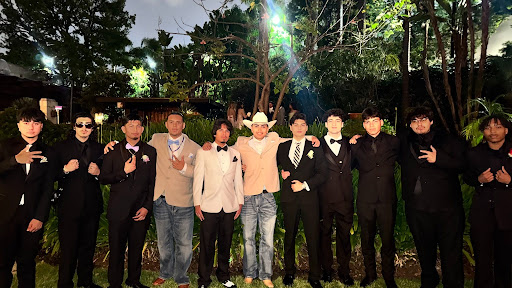
![Members of this year's prom court after the prom fashion show on April 19 April 19. “The fun part, like homecoming and stuff, that is like the movies, they have prom and stuff, announcing prom queen [and] prom king,” senior Stephanie Perez said.](https://wchsinsight.org/wp-content/uploads/2026/05/40FC9FA0-2E0E-4D8A-A044-BBC0E7A131A0.jpg)