


This summer, one of the most-watched sporting events is coming to North America: the World Cup. Like the Olympics and other major sporting events, the World Cup takes place every four years. Across Canada, the United States and Mexico, 48 countries will compete in soccer matches in the hopes of bringing prestige to the nations and people they represent.
The competition starts off in the group stage, where each group is comprised of four countries who will play each other. The group stage’s grading system is: a win is three points, a draw is one point and a loss is no points. The top two countries of each group will continue to the knockout stage, where a loss means a trip back home. The World Cup Final will determine the global leader of soccer, and according to FIFA, the International Federation of Association Football, is a match that reached 1.42 billion people in 2022.
Junior Eric Sanchez will support Mexico during the World Cup. Although Sanchez, a Football Club Barcelona fan, supports Mexico, he believes Spain is the best contender.
“You know, they have the players, like Lamine Yamal, Nico Williams, all these other players. So they have a really good team. Young players with some veterans too,” Sanchez said.
According to NBC Sports, an American sports programming division, the countries that have the highest chance of winning the World Cup based on betting odds are: Spain, England, France, Brazil, Argentina, Portugal, Germany, Netherlands, Norway and Belgium.
The World Cup has experienced various upsets, such as in 2022 when Japan beat Spain, when Saudi Arabia beat Argentina and when Morocco beat Portugal. Despite believing that Spain has the greatest chance of winning this summer, Sanchez believes that Ecuador will be a dark horse in the competition.
“They have some young players, I think they have Pacho, they have Moises Caiseido. So, you know, that defense, it’ll be suffocating for the other teams,” Sanchez said.
Argentina is the most recent winner of the World Cup and is considered a powerhouse going into this year’s competition. The team is abundant with big-name players such as Lionel Messi, Lautaro Martínez and Julián Alvarez. While sophomore Delmy Lazo believes England and Portugal have the greatest chances of winning, she is excited to watch Argentina compete.
“Because they have a lot of talent. Messi is there too. So it’s like, he’s the GOAT and basically carried all of the World Cup last year,” Lazo said.

This World Cup is unique in the fact that it has 48 teams, an expansion from the initial 32 teams from previous years. Sophomore Romy Castaneda appreciates this change because of the greater amount of inclusivity, interactions and coverage.
“For the fans, I feel like it can be seen as more media. And people who are in that community, watching soccer, they find it fun, and they can see more of their favorite players, their country… For the players, they also have fun because they get to represent their country,” Castaneda said.
On the other hand, Sanchez does not appreciate the new addition and disapproves of FIFA’s motives.
“But I don’t like the part where they’re adding all these other teams where maybe stadiums won’t be as hyped up because the matchups aren’t as good. I think it’s mostly just for the money, but I really do think it’s just not that good of an idea… There’s more quantity, but less quality of games,” Sanchez said.
Due to the increased number of teams participating in the World Cup, some nations are experiencing the tournament for the first time, such as Uzbekistan, Jordan, Cabo Verde and Curaçao, the smallest nation to ever qualify for the World Cup. Lazo appreciates the global aspect of the World Cup and the interactions that come with it.
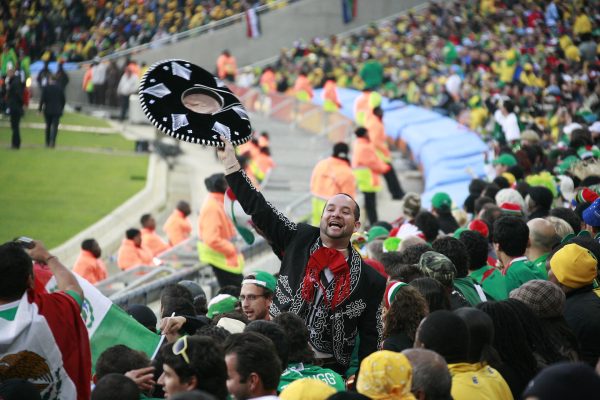
“Say I’m Mexican, and then there’s a Japanese individual. Yeah, we come from different backgrounds and we share different traditions, but we can still connect together through our shared common interest, like for the love of soccer. It doesn’t matter what your background is as long as you love the sport, it brings more people together, and as we go, we’ll see how these polar opposite cultures mesh together. It’s very diverse. It’s a good thing,” Lazo said.
Not only does the World Cup bring together people of different nationalities, but people of different fandoms. Whenever national teams play together, rival fans and teams suddenly become allies and friends.
“I feel like it brings communities together just because it’s a shared experience, you can just root for the same people. Going back to the club thing, you can go for different clubs between you and your friends or family, but at the end of the day, if it’s the same country, you all are gonna want to root for the same country,” Castaneda said.
The World Cup brings forth a new level of national pride and a different dynamic to soccer, expanding loyalties from local areas to nations.
“You know, maybe Chivas fans going for America fans or, you know, for Spain, you have Real Madrid fans going for Barcelona players or Barcelona fans going for Real Madrid players,” Sanchez said.
Despite the anticipation for the competition, ticket prices have become roadblocks for fans looking to attend matches. According to Reuters, a multimedia news agency, “Tickets to the opening match on June 11 at Mexico City’s Estadio Azteca range from $560 to $2,735 while the rest of the group stage games are between $100 and $575.” The prices increase as the competition goes along.
“No, I will not try to attend a game. Those tickets are way too expensive just for it to be watching ,” Castaneda said.
Fans have also expressed their frustration with resellers, or “scalpers,” who have contributed to the increased ticket prices.
“Basically, what they do is they buy all the tickets, right? And they resell them at a crazy, insane price. So say, a bleacher price, for nosebleeds, was maybe $500, and what the scalpers would do is buy those $500 tickets by using these bots, to basically buy them out. Then they’ll resell them on like Ticketmaster for like $2,000,” Lazo said.
Although the World Cup ticket prices have evoked frustrations within fans hoping to attend for the first time, many are still enthusiastic to watch the tournament. The World Cup is a global phenomenon, bridging the gap between cultures and spotlighting unique nations. In a few months, the passions of all these different people will meet on the pitches of North America, huddled together to watch soccer, or “the beautiful game.”
First Picture Credits: 2018 World Cup Final
Second Picture Credits: Mexico Fan





.jpg)