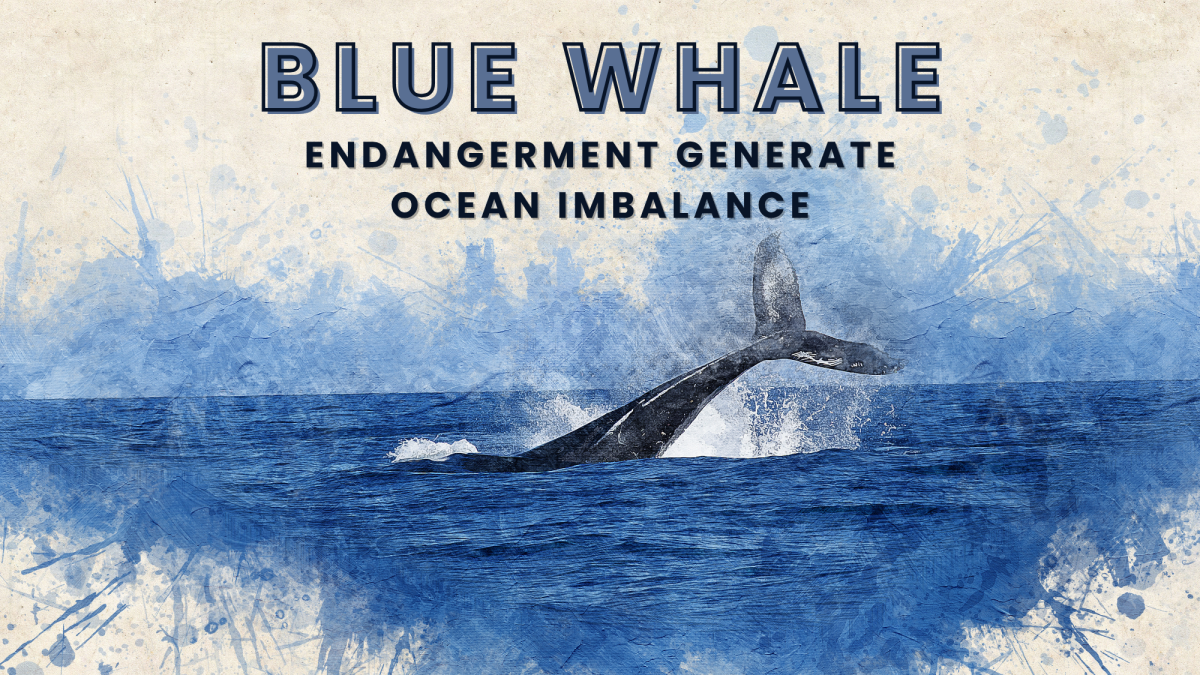
In the present day, blue whales are classified as endangered; their reduction directly impacts marine ecosystems and weakens the ocean’s carbon capture capacity, and indirectly affects local beaches.
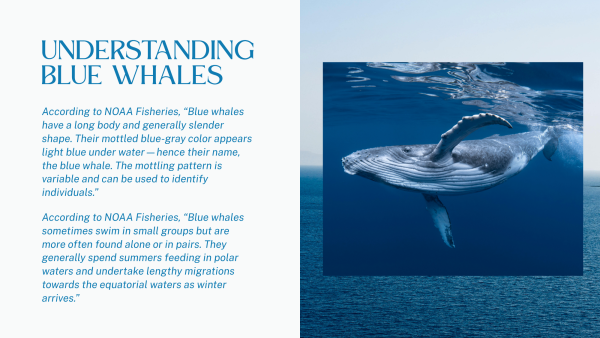
Based on NOAA Fisheries, which manages the stewardship of ocean resources, blue whales are the largest animals, weighing up to 330,000 pounds and a length of up to 110 feet, comparable to three school buses, estimated to have a lifespan of around 80 to 90 years.
As stated in NOAA Fisheries, the most recent study for the blue whale population was in 2018, and showed that there were about 10,000 to 25,000 blue whales worldwide, and an estimated 1,500 blue whales that feed along California’s coast, one of the “largest known gatherings of blue whales globally.”
(Carolina Salazar)
As claimed by the marine mammal rescue and rehabilitation center, The Marine Mammal Center, before whale hunting (or modern commercial whaling) reached its pinnacle in 1931, there were almost 30,000 blue whales killed. By 1966, blue whales became so scarce that the International Whaling Commission (IWC) established protection for all whales worldwide.
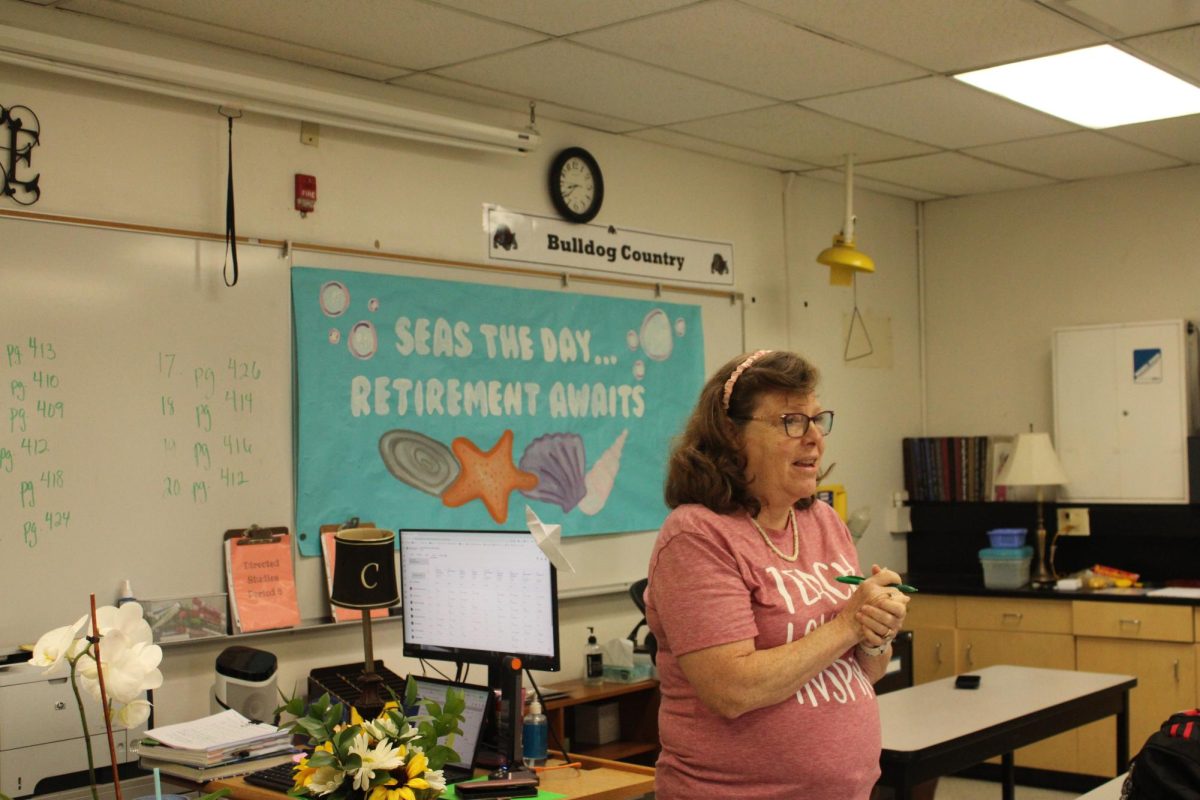
AP environmental science, biology and biology honors teacher Susanna Flores lists common factors that contribute to marine animal harm.
“But then all these different things, ships, oil spills, pollution, plastic pollution, you know,” Flores said.
Reported by NOAA Fisheries, one factor that contributes to blue whale endangerment is entanglement in fishing gear; the whales may swim off with the “gear attached or becoming anchored.” Once caught, whales may tow the gear for long distances, eventually tiring them out, leading to “fatigue, compromised feeding ability, or severe injury,” which may result in death.
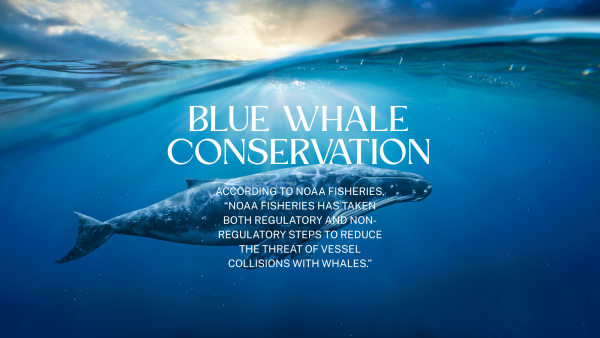
Per NOAA Fisheries, another contributing factor is vessel strikes, which are collisions between any watercraft or marine animals. Vessel strikes are able to injure or kill blue whales, with the risk rising in some coastal areas (like Santa Barbara Channel, San Francisco Bay and Monterey Bay) that hold heavy vessel traffic, for example, ports and in shipping lanes, or from “larger vessels and vessels traveling at high speeds.”
As stated by NOAA Fisheries, additional threats include ocean noise consisting of industrial shipping and oil/gas exploration, and “habitat degradation, pollution, vessel disturbance and climate change.”
Reported by the nonprofit that protects endangered wildlife, Saving Animals Facing Extinction (SAFE Worldwide), “If whales aren’t safe, neither are their ecosystems.” Whales transport nutrients each time they dive and resurface, which boosts the marine life food web and productivity, and absorb carbon dioxide, which increases its removal from the atmosphere.
Flores expands on how the loss of a marine animal population can begin a “trickle effect” on their ecosystem.
“We talk about keystone species (an organism that holds an ecosystem together) and how they can kind of have this cascade effect, trickle effect, on influencing other species,” Flores said.
(Carolina Salazar)
Based on NOAA Fisheries, Blue whales feed “exclusively on krill.” Their habitats are Alaska, New England/Mid-Atlantic, Pacific Islands, Southeast and the West Coast.
“If the blue whales were not present, like, what would happen to the krill population? Would it be available for other species? So maybe other species would flourish. So see, it has like this trickle effect,” Flores said.
Based on the nonprofit digital media organization FairPlanet, without whales, the krill on which they feed would “multiply exponentially.” Krill will diminish the population of phytoplankton and algae, which they consume. If this were to occur, a domino effect would be set.
Fewer small fish would be fed, which in turn would affect marine mammals and seabirds. Phytoplankton also acts as a carbon sink because when they die, they sink and lock the carbon deep underwater, which reduces the carbon in the atmosphere. If less carbon is absorbed, temperatures would drive even higher, ultimately impacting not just California’s coastal biodiversity, but worldwide.
As stated by SAFE Worldwide, to reduce whale bycatch which is accidental entanglement in commerical fishing gear,, there are traps that involve no line, which reduces the probability of entanglement. Another way to reduce bycatches is directly by lessening seafood consumption, which currently “exceeds all sustainability quotas.”
Without blue whales, there would be more carbon dioxide in the atmosphere, fewer nutrients for other ecosystems and an imbalance in the ocean ecosystems worldwide.
“Nature gave us this balanced ecosystem, and then we come in, and we alter it in some way, and then that can have trickle effects,” Flores said.