
Sleep is one of the most important parts of a healthy lifestyle, especially for students. There may be many times when students have to lose sleep due to late-night studying, using electronics, or even late-night sports practices. Although these may be part of a student’s routine, lack of sleep can negatively affect a student’s academic and physical performance. Sleep is not just a time to relax, but it is the time when a person’s brain and body can reset for a new day.

One of the ways sleep can be impactful is through a student’s concentration and focus when learning. According to an article from Harvard Medical School, the brain processes and stores information learned throughout the day during sleep. Students who get enough sleep are often able to focus better in class, remember information more easily, and solve problems more effectively.
Not getting enough sleep can be seen as missing out on just a few hours of sleep or not getting proper sleep quality, like waking up in the middle of the night, which can later translate to reduced memory and focus.
Sleep largely impacts a student’s academic life. Students who get enough sleep routinely usually have higher grades and have increased motivation to participate in class. On the opposite side, students who are tired due to lack of sleep may find it difficult to stay awake during class, may feel increased brain fog, and may feel too exhausted to study or complete assignments.
As students are still growing, it is important that they get enough sleep and rest when they feel tired or called to do so. According to an article on Recommended Amount of Sleep for Pediatric Populations, by the Journal of Clinical Sleep Medicine, teenagers should sleep for a total of eight to ten hours each day to promote improved attention, behavior, learning, memory, emotional regulation, quality of life, and mental and physical health.
Junior Joshua Ling has an optimal sleep schedule, usually sleeping from 11 p.m. to 7 a.m. This makes him feel energized and awake for his day. As a football player, he finds that when he gets enough sleep, he feels stronger and faster during practices and games, whereas the lack of sleep makes him feel weaker and unable to perform to his full potential.
“Your body feels heavy, and everything just feels slower, your body will ache more, and your practice will be bad because you didn’t put in that 100%, in weight training too, you can’t do your max weight because you don’t have that max effort,” Ling said.
Not only is sleep important for athletic and academic performance, but also for day-to-day life and activities. This means sleep affects daily routines in keeping someone energized through the day for routine tasks such as cooking, cleaning, and even outdoor hobbies.
Senior Lourdes Salazar enjoys roller skating as one of her main hobbies. She understands the importance of getting enough sleep to be fully focused when she is roller skating, especially because her sessions can last up to two hours. Alongside a healthy diet, Salazar feels sleep impacts her performance the most.
“Usually, for me, roller skating, I stay really focused on the floor to like not trip over anything, and I always feel like my depth perception is off when I don’t sleep well, the I just don’t feel well-balanced, which is really important with roller skates, so sleep is really what gives you the best performance,” Salazar said.
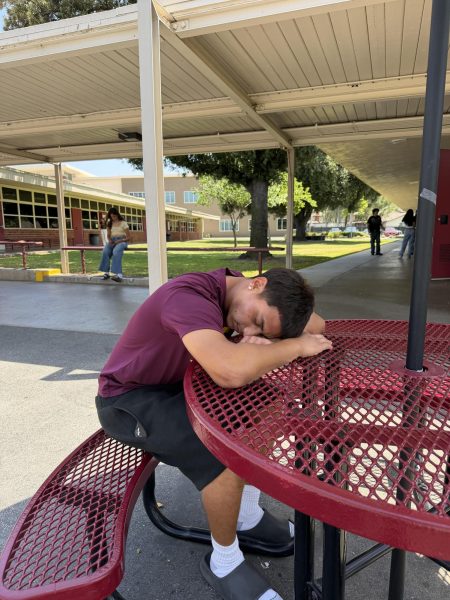
Some students may even take naps throughout the day or after a long day of school and sports practices to allow their bodies to reset and push them through the rest of the day. A student may feel drained or socially exhausted after a long day of having to communicate with teachers, friends, teammates, coaches, and other staff. Napping can help their body wind down and prevent burnout from having to repeat this routine daily.
Junior Moses Gogue relies on sleep to be energized and zoned into his football practices and academics. With rigorous practices and school work, Gogue takes daily naps that help his body, mind, and muscles restore.
“I’d say I sleep a lot. I just sleep all the time, after school, after practice, I take naps a lot. I feel well rested and energized to practice. When I’m more rested, I would say I feel like my brain is just ready to go to work, and im ready to focus,” Gogue said.
An adequate amount of sleep plays a major role in the success and well-being of students in all aspects of their lives. As students are still growing and juggling many responsibilities, it is important that their bodies are taken care of.