On April 24, all 22 members of the National Science Board (NSB) received an email, on behalf of President Donald J. Trump, stating their positions were “terminated, effective immediately,” according to ScientificAmerican, a publication focused on reporting research in science. This change will not only create limitations in education, but also in the country’s scientific progression.
According to the U.S. National Science Foundation, NSB was established in 1950, which is an independent board that oversees the National Science Foundation (NSF) and advises the president and Congress on science and engineering policies.
NSF is a federal agency that promotes scientific and engineering progression to the country, advances in national health, prosperity and securing national defense.
Moreover, it is one of the top three federal agencies, though independent, it funds basic research and development at U.S. universities, which, according to NSF’s LinkedIn, supports about 20 percent of research conducted by U.S. institutions.
According to the National Public Radio, an independent, non-profit media organization, the White House stated the firing of the board met the requirements of a 2021 court case, U.S. v. Arthrex.
This court case found judges were unconstitutionally appointed, correlating to the dismissal of the board, according to the White House, which was the reason for the removal of the board as concerns raised whether “non-Senate confirmed appointees” could execute orders Congress gave the NSB.
With the firing of NSB’s members, NSF is affected as the NSB provides direction, sets long-term priorities and goals for NSF, identify issues affecting NSF’s future, looks over and approves large funding and research projects.
This would impact education in the U.S., especially universities that receive funding from NSF for basic scientific research. Not only that, but the dismissal would lead to slower scientific progression within the U.S.
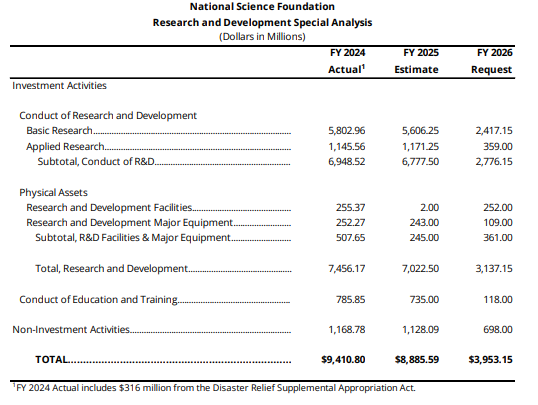
Annually, the NSF receives roughly $9 billion in funding, but faces over a 50% reduction compared to the previous year, resulting in about $4 billion now.
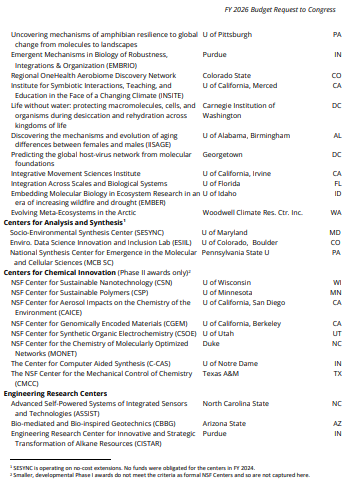
University research is threatened by a lower amount in funds, limiting projects and fewer grants awarded to the universities. Some of these institutions include MIT, Harvard, UC Berkeley, UC San Diego, UC Pennsylvania, Princeton, according to NSF FY26 files.
According to NPR, Willie May, one of the fired board members, stated he has “watched the systematic dismantling of the scientific advisory infrastructure of this government with growing alarm, and the National Science Board is simply the latest casualty.”
Since last year until now, the board has gone without a director. Although the board is independent and apolitical, the government can interfere and influence decisions within the foundation.
According to InsideHigherEd, an independent digital media company providing daily news, Keivan Stassun, a board member since 2023, stated the NSF will “essentially become a pass-through for implementing things in the domain of sciences and technology that the administration just wants to do.”
The removal changes the board’s independence, allowing the White House Office of Management and Budget (OMB) to control the funding entirely, serving the administration instead.
Overall, the firing of the board members will create setbacks in the U.S. scientifically, limiting research and education due to a cut in funds, not only to the country but to universities as well.