Cesar Chavez, a leading figure in American labor and civil rights history, devoted his life to improving conditions for farm workers. According to the Cesar Chavez Foundation, he was born on March 31, 1927, in Yuma, Arizona. His birthday has since been proclaimed a U.S. federal commemorative holiday by President Obama in 2014 in his honor. Following the loss of his family’s farm during the Great Depression, Chavez relocated to California at age 11, where his family worked as migrant laborers.
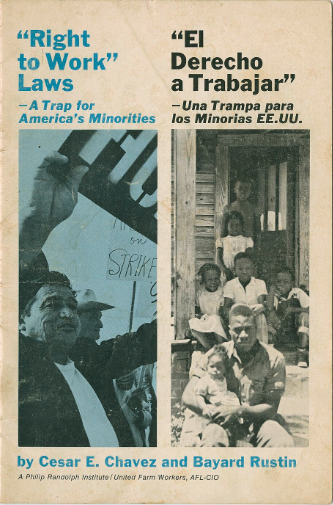
Photo courtesy of A. Philip Randolph Institute/United Farm Workers, AFL-CIO
The American Federation of Labor and Congress of Industrial Organizations (AFL-CIO), the nation’s largest federation of unions, reported that Chavez likened farm labor to “‘being nailed to a cross,’” illustrating the grueling physical work and harsh conditions faced by field workers.
According to the CCF, Chavez began his organizing work in 1952 with the Community Service Organization, a prominent Latino civil rights group in California, after meeting its founder, Fred Ross. He spent a decade with the CSO while laying the groundwork for a separate organization focused on farm workers. On March 31, 1962, Chavez left the CSO, relocated to Delano, California, and, with $1,200 in life savings, co-founded the National Farm Workers Association alongside Dolores Huerta.
This leadership has inspired generations of young people to look to the past as a model for their own activism.
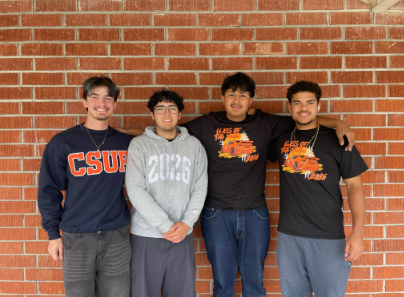
”They can copy his inspiration, his words of inspiration, and his leadership and apply that to their day-to-day life,” junior Isaiah Lumbreras said.
The AFL-CIO reported that the NFWA later joined efforts with the Agricultural Workers Organizing Committee, a union funded by itself. The two organizations merged in July 1966 to form the United Farm Workers Organizing Committee. Six years later, the group became the United Farm Workers of America after formal affiliation with the AFL-CIO.
Between 1967 and 1969, the UFW launched a nationwide boycott of California table grapes to protest labor practices at Giumarra Vineyards, then the state’s largest grower. The campaign secured a contract that raised wages, imposed a temporary hiring freeze, and created a joint-labor management committee to oversee pesticide use.
As the momentum of the grape boycott waned, Chavez lobbied for the passage of the California Agricultural Labor Relations Act of 1975, working closely with Gov. Edmund “Jerry” Brown Jr. to secure its passage. According to the American Postal Workers Union, an AFL-CIO affiliate that actively documented labor history, Chavez led a 1,000-mile march to support the law. When it passed on June 5, 1975, CALRA became the first state law in the United States to extend collective bargaining rights to agricultural laborers, addressing a gap left by the National Labor Relations Act of 1935, which had excluded agricultural laborers from federal protections.
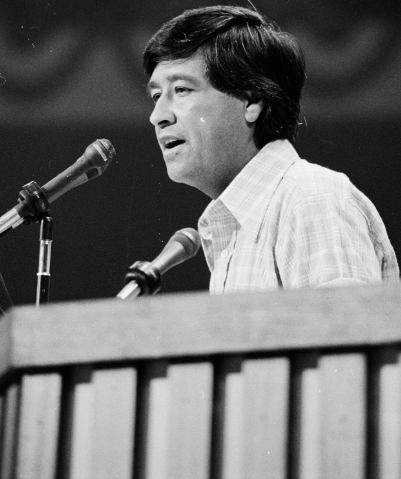
Photo courtesy of Warren K. Leffler
The lessons of Chavez’s activism continue to resonate in education. Assistant Principal Josefina Steinmetz recalled a news story that captured the impact of farm labor on students: a student presented her graduation diploma to her father, a strawberry farm worker.
“I see the tremendous impact it had on her resilience and her ability to take her education to the highest level,” Steinmetz said. “And I’m sure she’s not the only one. I’m sure we have several farm workers who work very hard and who, in turn, push their students to be resilient and successful in education.”
Chavez’s legacy also motivates students to engage in civic action. ELD teacher Emily Milon described how her ELD students, after studying the work of Chavez, Huerta and Larry Itliong, became inspired to advocate for a Day of Service recognizing both Chavez and Huerta. The students wrote to school board members, and Milon arranged for Huerta to record a video supporting the students via her contact with a parent who had worked with Huerta before.
“My friend Ms. Pelleriti there, who’s on the union, she was the one who actually told me, ‘Hey, I think your advocacy actually worked because the union is looking at the calendar and they’re gonna put Cesar Chavez Day on the calendar in two years,’” Milon said.
Chavez and Huerta drew inspiration from the nonviolent tactics of Mahatma Gandhi and Martin Luther King Jr., and rallied under the slogan “Viva la causa” (“Long live the cause”). According to the CCF, Chavez incorporated fasting into his approach of civil disobedience. In his final and lengthiest fast at age 61, Chavez spent 36 days in Delano advocating against the health dangers posed by pesticides to those in the fields.
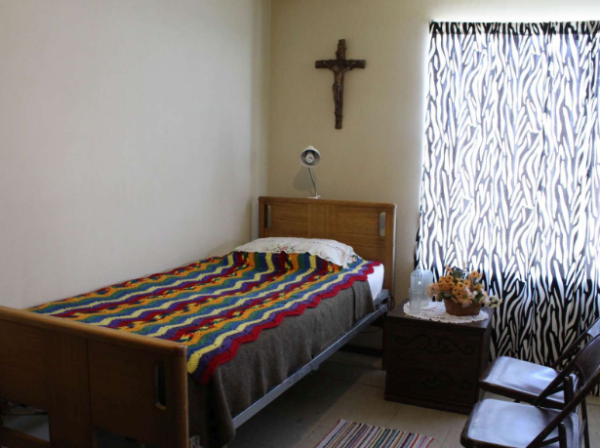
Photo courtesy of NPGallery
Reflecting on the enduring relevance of Chavez’s methods, digital activism has become a contemporary form of civil disobedience.
“I think people are taking a nonviolent approach to protesting, especially with social media. There’s no need for violence, and a lot of it has to do with just using your voice,” Lumbreras said.
Chavez lived modestly throughout his life, staying true to the values he championed. According to the CCF, he declined a presidential appointment from John F. Kennedy to direct the Peace Corps for Latin America and remained on an income of no more than $6,000 per year until his death in 1993.
Chavez died on April 23, 1993, in San Luis, Arizona, at the age of 66. Over 50,000 people attended his funeral in Delano. His rally cry, “Si se puede” (“Yes, it can be done”), endures as a symbol of his activism. In the following year, Chavez would be awarded the Presidential Medal of Freedom, the nation’s highest civilian honor. Eventually, his birthday would be celebrated as a holiday in different states, such as California, which had been the first to recognize this day in 2001.
The ongoing observance of Cesar Chavez Day ensures that his principles continue to inspire communities and students to exercise their civil liberties and challenge injustice.
“I think not just in the Hispanic community, but everyone in this nation knows that they can take advantage of freedom of speech and the freedom to do demonstrations—peaceful ones, of course—where they can let their voices be heard. That’s the beauty of this country,” Steinmetz said.