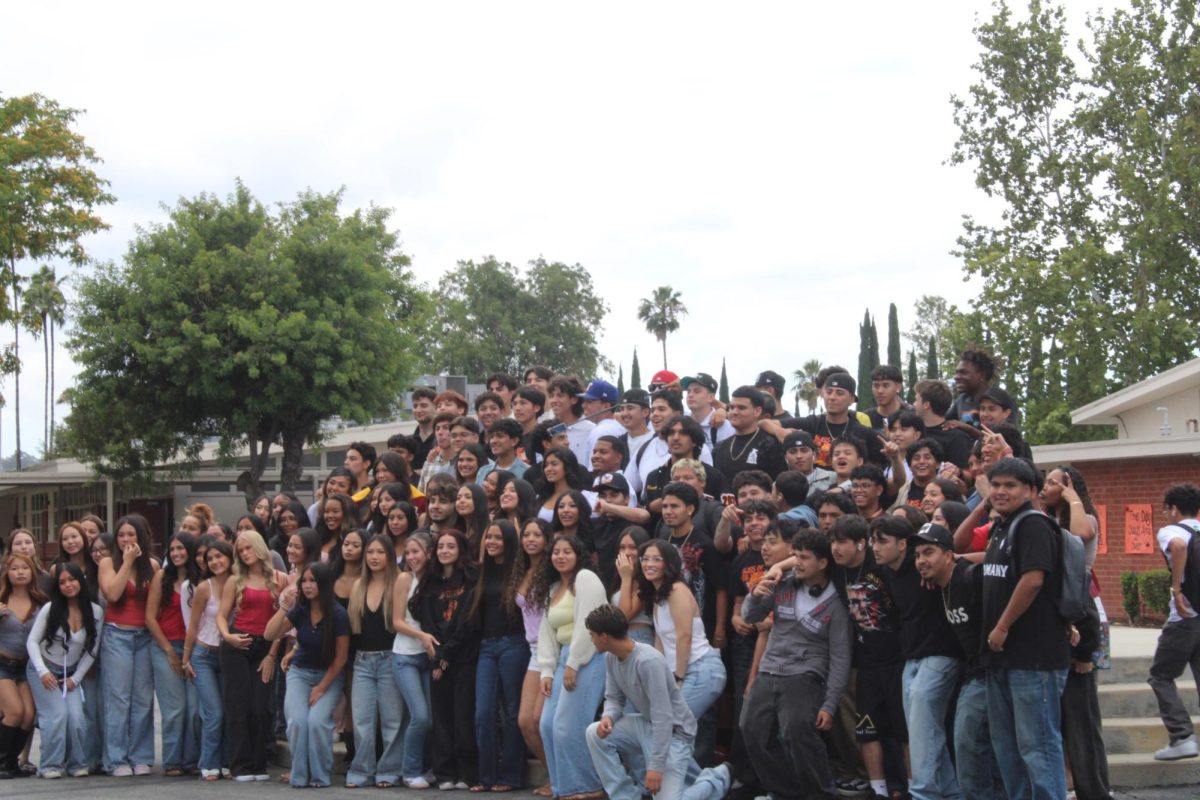
Every year, as new students join the school, it brings change within the campus community and class years. Through the change of population and people in the school, individuals apart of each class year show a more focused shift in mindset, academic performance and priorities.
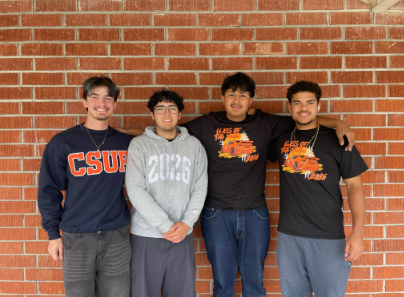
Such changes showcase the growth in upperclassmen who have matured over their years in high school. For example, Senior Devin Vicario experienced mindset shifts from his first two years of high school to the last two. Over the years, the topic of college and career planning has brought self-discipline and urgency to his academic performances. Now involved with football and track, peer counseling, and AVID, his present priorities are maintaining at least a 3.0 or 3.5 GPA in school.
“Freshman and sophomore year, I didn’t really do anything. I was just there to just be there. I would just enjoy going to practice, just running track, messing around with my friends,” Vicario said.
Such motivation differences can be seen in their grade levels, as current seniors needed time to grow, whereas current sophomores are already exhibiting high performance levels. Sophomore Jonathan Lai has always prioritized maintaining high grades for his first two years of high school. He makes sure his work is always done despite being in extracurriculars like class council.
“I usually do after school or during class, if I can. And then if I don’t finish it, I’ll do it on the weekends,” Lai said.
This discipline is familiar for fellow sophomore Esabella Aguinaga. As a student athlete like Vicario, Aguinaga prioritizes both academic and athletic performance equally, utilizing her free sixth period to do homework or immediately after practice.
“My grades now compared to last year are very different because of the fact that I just didn’t really care, but now that I’m a sophomore, I realized how important my grades are,” Aguinaga said.
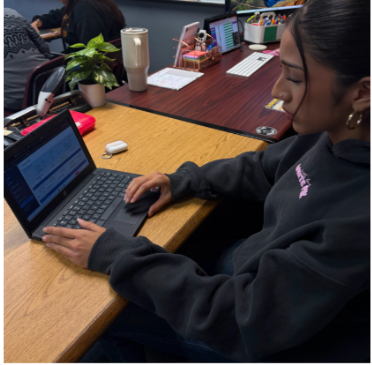
Sophomore Esa Aguinaga checks her report card during class to make sure her grades are up to her standards.
(Ann Trinh)
Aguinaga shared the same realization as Vicario, showing the strive for better grades and discipline resulted from previously low GPAs.
For students involved in sports and extracurriculars, balancing their priorities is often a struggle and a process that each student must personally improve in ways that work brings success for them.
“Last year I barely had above a 2.0, and right now i’m at a 3.0, still trying to improve,” Aguinarga said.
Other factors that may have also caused developing discipline later may be from student’s future planning as some students come into high school already set on their career whilst others are still discovering their path, which in turn affects motivation. This also includes the difficulty in balance due to personal priorities outside of school like family and work, and/or participation in more extracurriculars than others.
For example, Vicario greatly experienced a change in motivation when he set his goal on going to four-year college to major in Criminology. He first was deciding on going to the military, and being president of peer counseling, two sports, and AVID, discipline was something he had to work on a lot.
Math teacher Elizabeth Chu confirms her sophomore year class is excelling compared to her sophmores last year.
“I can motivate my student as much as I want, but I feel like, if I you know, there’s so much a teacher can do, it has to come from the student. They have to want it,” Chu said.
The underclassmen, specifically the class of 2028 have found focus in this balance and urgency to prioritize their grades just two years into their high school career. Upperclassmen have more developmental mindsets over their four years of school which has led them to overall success and stability within their academics as well.
The class year performance differences lead to the same end goal of a high GPA and strong balance. As well as what is deemed to be successful, which looks different for everyone.