As of Jan. 22, TikTok, a popular social media platform for creating, sharing, and discovering short, vertical videos, implemented a new policy, which sparked negative backlash from their users. The policy incorporated a new U.S. controlled ownership for those who are in the United States, enhanced data collection for AI, and citizenship status and Immigration status.
According to TikTok Newsroom, the new TikTok operation for American users is controlled by the TikTok USDS Joint Venture LLC ownership, which “is dedicated to the safety and security of millions of Americans who create, discover, and connect with what they love on the apps we operate,” which was established on Sep. 25 2025.
According to the online publisher founded in 2005, TechCrunch, the new ownership structure for TikTok is 45% for Managing Investors, which includes 15% for Oracle, 15% for Silver Lake, and 15% for Abu Dhabi-based AI firm MGX. ByteDance still retains 19.9% of TikTok ownership.
The majority of TikTok users fall in the age range of 18 to 24, making TikTok Gen-Z dominated and the largest user bases are in the United States and Indonesia. One of the billions of TikTok users is senior Evelette Real, who watches TikTok videos daily.
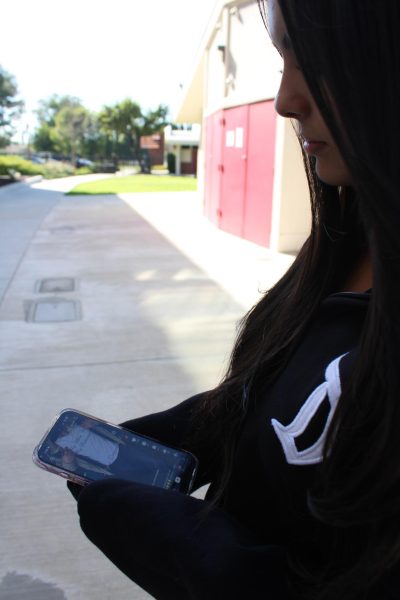
“I actually like to use it all day, throughout the day, in the morning, before I go to bed, when I´m doing my homework,” Real said.
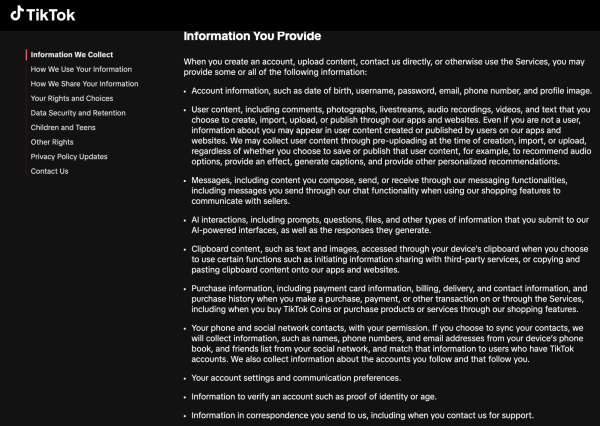
According to the journalism division, CBS News, there is expressed concern about the types of personal information TikTok says it may collect, even though “its previous privacy policy disclosed that it might collect the same types of data.” TikTok said it may collect users: Racial or ethnic origin, national origin, religious beliefs, mental health diagnosis, physical health diagnosis, sexual life, sexual orientation, status as transgender, status as nonbinary, citizenship status, immigration status, financial information, and government-issued identification numbers, “such as a driver’s license number.”
According to one the top five Canadian universities for research intensity ranked by top global and national organizations, The University of Ottawa, TikTok also collects “email, addresses, phone numbers, content you upload, keystroke patterns, battery levels … operating system, browsing history, ways of consuming data, time spent watching posts, searches, apps, filenames and filetypes, location, messages and times they are sent received and read, age, image, and personal contacts … Even if you don’t conscientiously share it with TikTok the app has access to it.”
The reason why U.S. tiktok collects additional user information, is to power its recommendation algorithm and target specific advertisement fit for each individual American user.
The new policy changes how TikTok describes its handling of sensitive data, the company now stating that it “processes such sensitive personal information in accordance with applicable law,” but the earlier policy narrowed it down transparently, stating that it used sensitive information only when necessary to run the service or to comply with legal requirements, “for example, using payment details to process a purchase or a driver’s license to verify a user’s identity.” (CBS News)
With the new TikTok policy, there is a rise of concern on the fact that users ‘ privacy and data can be protected, due to the precise location, biometric and immigration or citizenship status collection features. Sophomore Samantha Perez shares her thoughts on the usage of TikTok user’s personal data.
“I feel like that’s kind of an invasion of privacy. I turned off the settings for that whole location thing, because that’s just, I just think it’s an invasion of privacy, and I don’t think that’s like necessary to use a social media app. There’s not really many apps that ask for that kind of information,” Samantha Perez said.
This began when the U.S. began to face a national security risk, concerning its Chinese parent company, ByteDance, leading to former President Joe Biden, to sign the Protecting Americans from Foreign Adversary Controlled Applications Act, on April 24, 2024, which would “ban TikTok unless ByteDance sold its U.S. assets to an American company by early this year. Trump has repeatedly signed orders that have allowed TikTok to keep operating in the U.S. as his administration tries to reach an agreement for the sale of the company,” (AP News)
According to The University of Ottawa, there are cons to this policy, like how “Its data collection methods provide access to a lot of content on mobile devices. The company collects sensitive data about users even when they don’t save or share content,” raising red flags for privacy and cybersecurity, contrasting TikTok’s privacy policy with “users’ expectations when on the app, expectations that leaves users vulnerable to cyber-attacks.”
Potential benefits are increased national security, which keeps the app accessible in the U.S, and content moderation, which is aimed to reduce bullying, harassment, and misinformation.
Since now TikTok is US-owned, Trump was questioned by AP News if he would “suggest more content promoting his Make America Great Again (MAGA) movement, Trump said he’d make it ‘100% MAGA’ if he felt he could, but he intends for ‘every philosophy, every policy’ to be ‘treated right.'”