


Music, the audible art form, is all around the world. Although music taste differs from person to person, there’s always subgroups that share the same taste, connecting communities like a language that everyone can understand. It holds diversity ranging from genre to artist, and sounds that each individual is free to choose what fits best for them.
Especially over time, different eras trend different music, and people grow their taste as they grow older as well. It invites discovery within sounds but also interests and identity for the listener.
According to The Foundation of Music Literacy, “Music educators have observed, that student involvement in school music has a positive impact on other areas of their lives…musical involvement improves a student’s self-discipline, dexterity, coordination, self-esteem, thinking skills, listening skills, creative abilities and personal expression.”
Senior Christopher Buhac pursues music through marching band on campus, inspired by his older brother who used to be in drumline as well.
“Music is kind of everything to me, even though I don’t need it all the time, it means a lot to me because that’s kind of what I’ve been doing in high school, like my whole life almost, I’ve been pursuing music,” said Buhac.
Besides musical involvement, music is utilized by all students as it can have an affect on mood and emotions for students. Commonly, music is used for setting a certain mood, regulating and relaxing emotions or boosting one’s mood.
Freshman Yahir Contreras notices a disruption in his coordination and focus at school when he does not get to listen to music.
“I don’t do my work the same. I’m not as focused when I have my headphones in,” Contreras said.
Like Contreras, students often use devices like earphones and headphones to focus on their music when doing schoolwork. Junior Aaron Pinuela’s functioning and motivation is impacted when he does not have his headphones, in and outside of class.
“It affects me dramatically because without them, I can’t really function in school. Like right after class, I’m usually listening to music, so I kind of just feel bummed out,” Pinuela said.
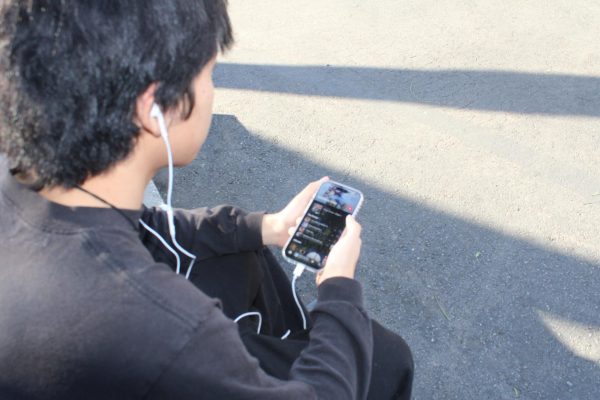
Besides functioning, young students’ liking of music comes from the freedom in discovering music that helps them express themselves and connect with others.
Senior Kimberly Baca finds meaning in music through it’s ability to connect others that have the same taste.
“There’s different genres in music, and you can connect to different types of music. And music can connect you to people, you could become friends with somebody over music. You could bond with people over music,” Baca said.
Music events and festivals invite the idea of connection amongst diverse individuals. Students can attend concerts and other musical events to make new friends or bond with friends with similar taste.
“Music means a lot to me because it just brings me joy and brings me happiness when I’m down,” Contreras said.
Baca also uses music to help her sleep and for overall enjoyment.
“If I feel stressed or something, I usually listen to music, and it calms me down, and I feel less stressed,” Baca said.
In these developmental stages, students explore and continue to utilize music in ways that fit best for them. It can be used for sleep, focus, relaxation, self-expression and more benefits to the student life through personal choices. It is evident that music is fundamental in shaping student life as students continue to let music set its place in their minds and hearts.



Tehoc • Feb 9, 2026 at 10:18 pm
Ann is a phenomenal writer with a talent to reach the stars