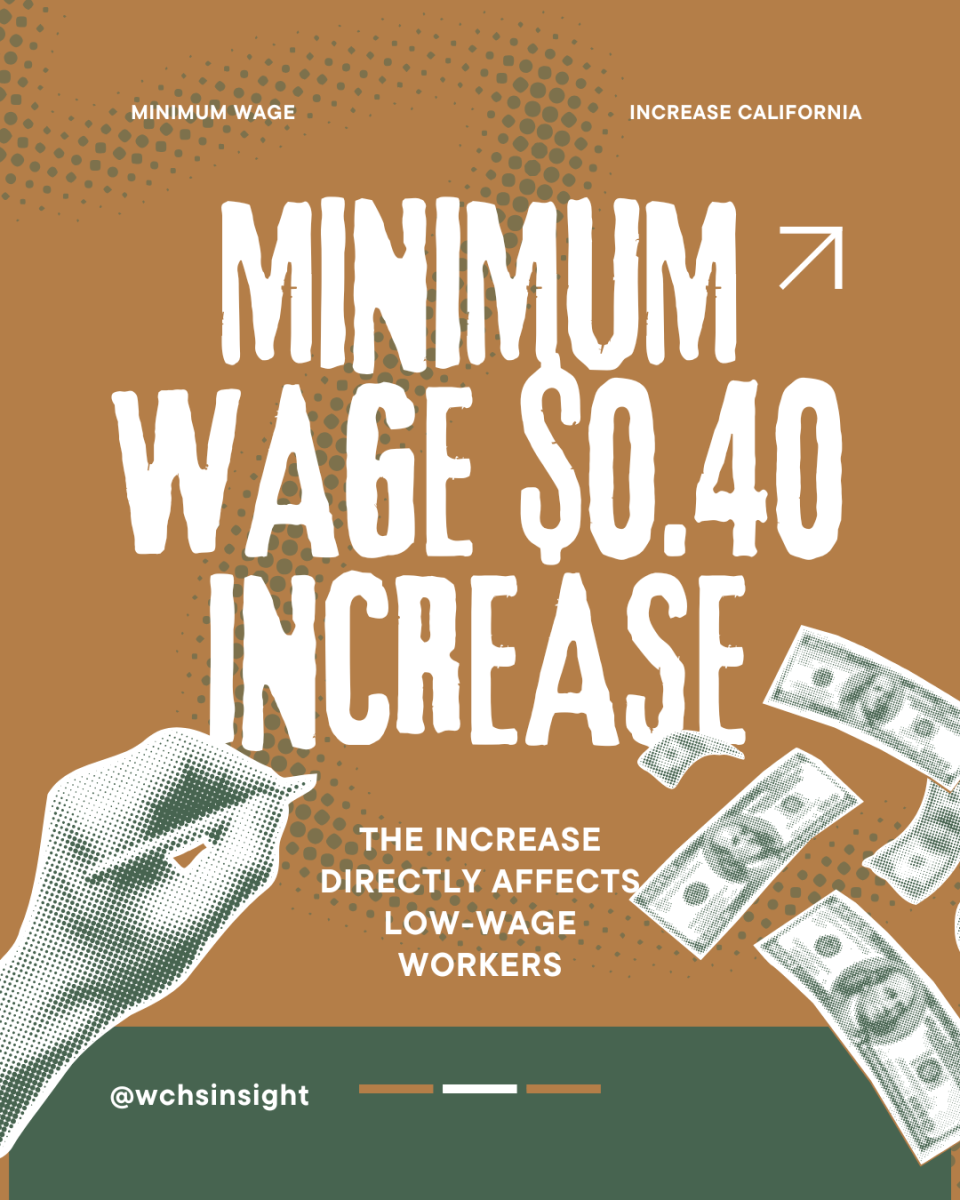
A mandatory minimum wage increase of $0.40 in California became effective on Jan. 1 , which now reaches $16.90 per hour, due to the rising cost of living sparking positive and negative opinions from employers and those who may be affected by the economy and inflation.
According to an article by Everfi which is a connection institution, the increase directly affects low-wage workers by adding slightly more money to their pay, supporting them to spend slightly more on necessities are essential, such as housing, food and gas.
Others who are more indirectly affected are consumers who encounter higher prices, and small businesses such as restaurants, grocery stores and retailers which rely on low-wage labor.
On whom this increase affects, junior Mia Aceves mentioned that since the minimum wage increased, so did the prices
in local businesses, either at an unfair or fair amount.
“It affects my parents because when they work, they might not get enough, and the prices are going up, so we need more money,” Aceves said.
Although there was an increase on minimum wage, this doesn’t cause a significant increase in inflation, but a rise in prices so business can still profit. This leaves the people who are potentially struggling financially or from having a low-income to not actually benefit from the minimum wage increase.
According to an article by The Food Institute, which provides news, data and trends about the food industry, researchers found that between “2011 and 2019 increases in the minimum wage saw employment drop 2.65 points (percentage in employment rate) and forecast a further 2.5 point drop once the new standards take effect,” resulting in the study estimating “250,000 jobs will be lost as the new minimums take effect.”
Meaning that since the previous years have caused a decrease in employment, there would be a similar pattern for the following years if the minimum wage continues to increase.
According to MinimumWage, a research organization dedicated to studying public policy issues, a survey of labor economists found that a majority believe minimum wage hikes actually worsen the cost of living. Research shows that higher minimum wage hikes have historically contributed to rising prices faced by consumers.”
One American Enterprise Institute, a public policy think tank, study “found that every $1 wage hike could cause as much as a 3.7% price increase in more rural, lower-cost living areas of the country.”
Additionally, in 2024, there was an implementation from $16 to a $20 per hour minimum wage, causing fast-food menu prices to rise more than “14% in just a year under the new mandate.”
Yes, there are various downsides to this increase, but there can also be good things that come out of this.
According to the National Employment Law Project, a nonprofit advocacy organization dedicated to building a just economy, studies consistently show that higher minimum wages help fix some food insecurity, which is the condition of not having access to the necessary amount of food, and help eliminate poverty from families.
Senior Dylan Burks, who has experience in what it’s like to have a job, elaborated on what the minimum wage may be doing to the economy.
“I feel like it affects the economy a little bit because even though we’re giving away more money with the raise I feel like it’s saving America more money and it’s benefiting,” Burks said.
More on economic growth, according to Broadleaf Results, a total talent management service, when the minimum wage rises, “economic growth boost typically follows” where it usually pops up in consumer spending. An increase in minimum wage provides workers with “more discretionary income to spend which bolsters retailers and other businesses.”
Although there are pros and cons, there is a middle ground between all this, and junior Joanna Boisclair, who has experience in retail, considers the 40 cent increase as almost nothing.
“I mean, it didn’t really do much cause 40 cents is not that much with the job being minimum wage, $16.50 an hour, so 40 cent increase is basically nothing, the minimum wage now is basically nothing,” Boisclair said.
Overall, this minimum wage increase partakes in the growing trend of the economy and living costs, additionally according to Kelly O.Scott, apart of the Employment Department of ECJ Blogs, California minimum wage increases for 2026, “What employers need to do: Employers must update their payroll systems to reflect these new state and local minimums and ensure proper posting of wage orders.”