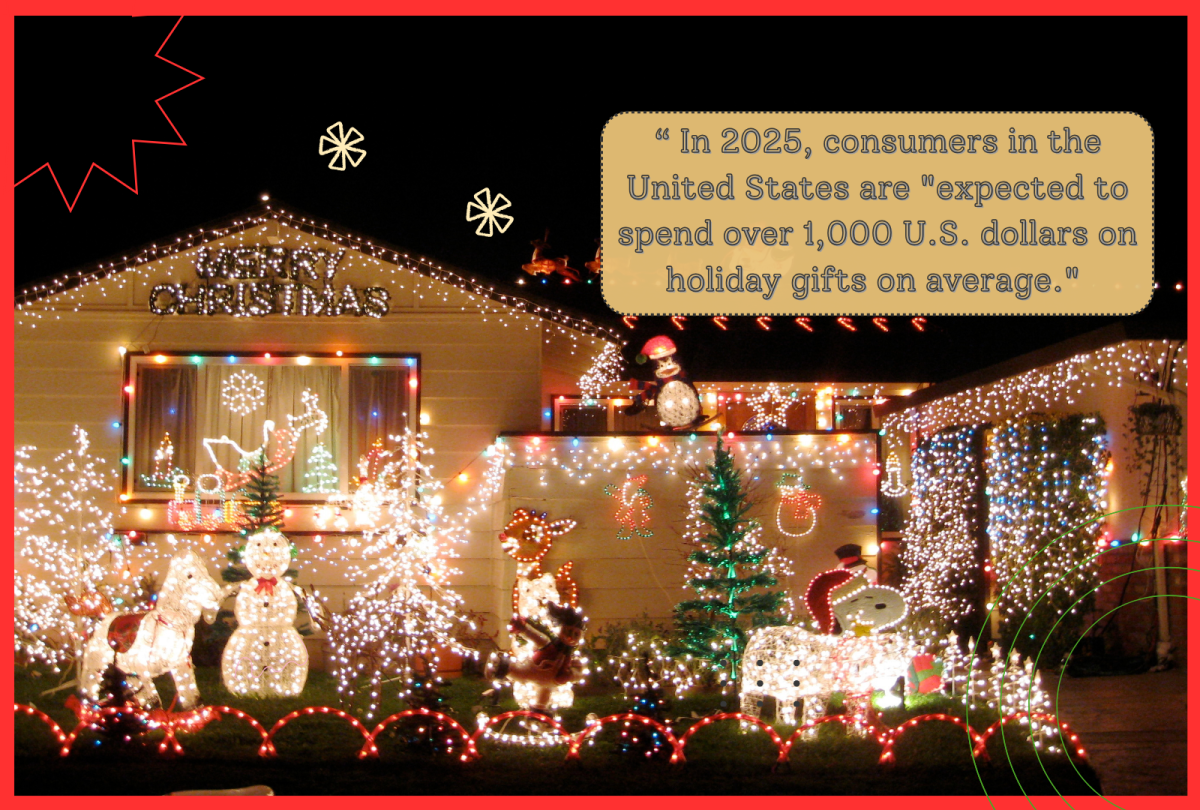
‘Tis the season where consumerism reaches its peak from desire driven from consumers’ to celebrate, even though there are increased prices, excess waste and emotional distress. Christmas is a major global holiday celebrated on Dec. 25, celebrated for the birth of Jesus Christ, and includes cultural traditions like gift-giving and decorating homes with lights and trees.
According to National holidays in the U.S. – Statista, Statista being a global data and business intelligence platform, “Christmas shopping starts for over 40 percent of Americans before the end of October, and on average consumers in the United States planned to spend roughly 870 U.S. dollars as of 2022.”
A portion of students and their families decorate their house for Christmas, the most common decoration being an evergreen tree with lights, ornaments, garland (a wreath or chain of flowers, leaves, or other materials) and stockings.
One of those students, Junior Kailyn Herrera, discusses her family’s possible budget for their house’s decorations, being half of the average of what Americans spend on seasonal gifts.

“Maybe $500, maybe that’s, I don’t know, because we have a lot of decorations from over the years that we reuse, we hardly buy new ones, so I’m just gonna say maybe,” Herrera said.
Although Herrera does reuse some decorations, buying new decorations contributes to the effects of consumerism since the plastic wrapping or used decorations end up in taking up space, or in landfills.
According to F.Watty from Predicted holiday spending in the U.S. 2006-2025, Statista, show that in 2025, consumers in the United States are “expected to spend over 1,000 U.S. dollars on holiday gifts on average.”
These heavy spendings lead to overconsumption of items like clothing or home decor that are excessive, or are a luxury and sometimes people are gifted multiples of one item.
Junior Kylie Bothwell can relate to the statement above and sees a rise in consumerism during the holiday season, particularly the consumption of clothing.
“My mom likes to buy new ornaments every year … I feel like, for Christmas, me personally, I get, multiple pairs of shoes with a lot of clothes and things that. I probably don’t need, but I get them anyway,” Bothwell said.
Sometimes, the social pressure of buying gifts can cause an increase in anxiety, and/or even depression, distinctly amongst Gen Z, leading to consumerism.
According to a 2022 study from Alfac, a Fortune 500 company (In the list of the top 500 largest companies) that provides financial protection, “more than half (55%) of all employees admitted they feel more anxious during the holiday season, and over 2 in 5 (43%) said they feel more depressed during the holidays. Anxiety is particularly high among Gen Z.”
Advertisements are one of the biggest factors in how people start their holiday shopping, especially advertisements around Black Friday and Cyber Monday.
Black Friday is a major U.S. shopping day that occurs after Thanksgiving, known for its sizable discounts, typically seen when in-person at stores, and usually marks the beginning of festive holiday shopping. Cyber Monday is the major online shopping event held on the Monday after Thanksgiving, and is typically for online shoppers.
According to F. Watty, “This period includes days, such as Black Friday and Cyber Monday … An incredible shopping hubbub is produced during this period, with a staggering 95 percent of U.S. consumers having said they intended to buy something during the Christmas season in 2024.”These dates increase the chances of impulsive purchases of unnecessary or even excessive amounts of the same item.
“A lot of gift sets come out and a lot of things come out in packs, so you would want to buy it, even though it’s a little more … yeah, gift sets and then, deals for Christmas,” Herrera said.
Often, the inessential presents or gifts for oneself result in a large environmental footprint from manufacturing, packaging waste and carbon emissions from global shipping, causing multiple landfills to be fully filled with undesired gifts.
According to Spread Cheer Not Waste; Bringing Back the True Holiday Spirit – Ecology Center, a community-focused organization, “The average American produces 25% more waste during the holiday season or one million tons of extra waste each week! Only a tiny fraction of this waste is recycled. The rest, around five million metric tons of holiday waste including packing material, unwanted gifts, and other items, journey on to their forever homes: landfills.”
Consumerism culture may continue to affect the U.S. environmentally and financially when feeling the pressure of purchasing unnecessary gifts for their loved ones, or having an excess amount of decorations that may potentially become waste.