December and January mark an important step in the lives of high school seniors applying to colleges, some being Universities of California (UC), California State Universities (CSU), and Ivy League Universities. While some colleges are still accepting applications, many seniors are done applying and now reflect back on the process.
Through academic preparation, counseling staff and extracurricular programs, high schools often encourage students to attend college. Attending college leads to economic benefits, because according to the U.S. Census Bureau, “the median income of households headed by someone with a bachelor’s degree or higher was $132,700, more than double the $58,410 median income of those with householders with a high school degree but no college in 2024.” These advantages often incite students to apply to college, and according to Education Week, a news organization that reports on K-12 education, during the 2024-2025 college application season, “close to 1.5 million distinct first-year applicants applied to 1,097 member institutions…”
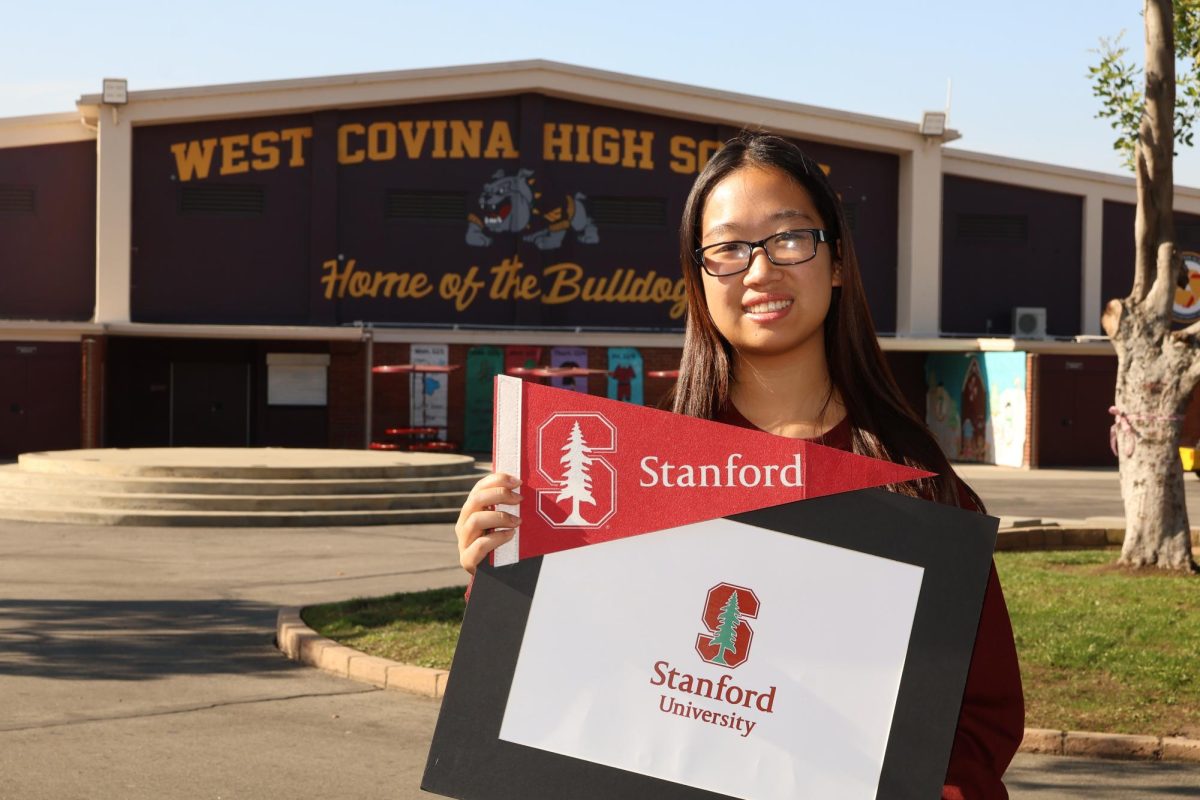
Senior Julie Liu applied to college using QuestBridge, an organization that connects high-achieving students from low-income backgrounds to the United States’ most sought-after colleges. She received a full-ride scholarship to Stanford University.
While most college applications are due in December and January, QuestBridge’s National College Match applications were due in September. In October, applicants discovered if they were selected as a finalist, and then ranked up to 20 colleges they would like to attend. If they “match” with colleges on their list, they are admitted with a four-year scholarship to the one that was ranked highest.
“…I chose specifically to do QuestBridge. One, because I wanted to find out if I was going to get into college really early, because I didn’t want to be stuck doing applications in December. And then also because of the full-ride, and because on top of paying for your tuition, they also give you money for travel and stuff like that,” Liu said.
Since Liu had to start her application process earlier than other applicants, she started writing her essay when summer break started. Her first draft was finalized in a couple of hours and she would go back and add to it or send it to people to review.
“I tell this to people all the time: If you’ve found the right topic that you should write about or if you actually find a topic that works for you, it should be very easy to write. It’s a personal statement, so you’re literally just writing about yourself. So if you’re finding it really hard to write, it probably means you chose the wrong topic,” Liu said.
QuestBridge’s College Prep Scholars Program equips low-income juniors with knowledge and resources to help them prepare for college, which Liu applied to and was accepted. A UCLA student, sent by QuestBridge, helped review Liu’s essays. Liu also sent her essay to friends and copied and pasted it into Chat GPT to receive suggestions. However, she was cautious when using their recommendations.
“You have to have a good radar of knowing what you should keep because you feel like it’s good for you, and what other people say, because it should still sound like you,” Liu said.
Liu believes that starting during summer break helped her stay organized and ensured she did not get overwhelmed, and recommends that other students do the same. She also suggests students figure out what they plan to do in the future. This is because Liu feels her application was made stronger by centering her essays and extracurriculars, Mu Alpha Theta Club, programs and internships, around her planned major: economics and math.
Senior Ethan Okazaki agreed that extracurricular activities should be centered around one’s interests, so students should begin to consider their major as early as possible.
“Start thinking about your major now. So then, in the future, you don’t regret taking classes that you didn’t want to take. And so it’ll make it easier going forward. Especially, when they contradict your extracurricular activities,” Okazaki said.
He believes in quality over quantity to show commitment and interest: spending more time in a few extracurriculars is better than less time in several extracurriculars, which can be viewed as filler.
Okazaki’s extracurriculars, such as ASB and baseball, were difficult to balance with his AP classes. Reflecting back, he thinks he took too many AP classes that were not associated with his major, international business/analytics, and believes it is better to not take a class rather than taking a “filler” AP class and receiving a poor grade.
Okazaki has been admitted into the University of Hawaii, San Diego State University and Azusa Pacific University. When deciding where to apply, he researched based on where he lives, the cost of the college and how far he wanted to go. He enjoys surfing and the beach, so he picked colleges around them.

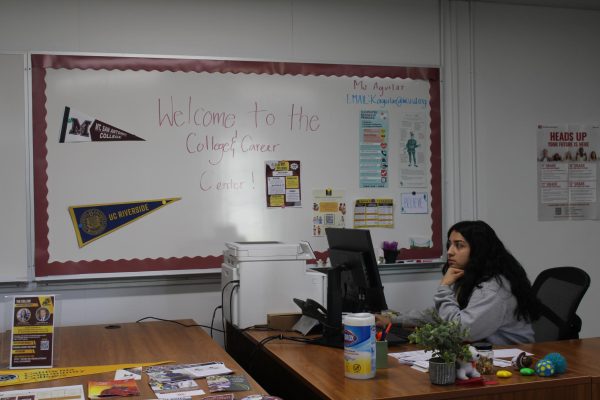
When applying to college, students can receive help from counselors, such as Counselor Kristin Kajikawa, who recommended juniors go to the College Application Boot Camp in the summer.
“We can tell you all about the college application and help you guys get started on your personal insight questions and your Common App essays,” Kajikawa said.
She believes that although extracurricular activities are important, grades are the most crucial within an application because they can determine which colleges you can apply to. She believes extracurricular activities can improve an application.
“So being in clubs or sports or leadership, extracurricular activities, you know, that makes you a well-rounded student, that’s going to help you stand out on a college application,” Kajikawa said.
According to Kajikawa, both grades and extracurricular activities are important in an application, so she recommends students focus on these areas if they want to attend college.
“For the younger students, like ninth and 10th grade, it’s really trying to get out there and be involved and to join things and be active throughout high school. For the older students, it’s still maintaining strong grades, but going out and looking at the different colleges and not just checking online, because they all look good online, right,” Kajikawa said.
While there can be a lot of stress and anxiety surrounding college applications, Okazaki clears some misunderstandings.
“It’s not as hard as people say they are. As long as you put in a good couple weeks, that’s all you really need to do,” Okazaki said.