During the winter, “the holidays” typically refer to cultural and religious celebrations like Christmas, Hanukkah, and Diwali. As holidays occur yearly, the saying “Happy Holidays” is a phrase commonly shared during this season to wish others wellness. Family traditions and cultures for the holidays may vary from dates of celebration to the activities themselves.
Overall, the holiday season in December is when Americans celebrate by decorating, spending time with family and feasting. The association to Christmas comes with sharing gifts with another and Santa Claus, a figure that spreads joy and provides gifts for the holidays.
On Dec. 25, Christian and Catholic practicing families celebrate Christmas to commemorate the birth of Jesus Christ, but communities that don’t practice the former religions may also celebrate for secular reasons or culturally.
Senior Chris Perez celebrates with his family on Christmas Eve, following Mexican culture, but practicing Catholicism, he has both cultural and religious traditions on Christmas Day.
“On holidays, we usually go to church early in the morning and then make some tamales with my grandma,” Perez said.
Like Perez, junior Travis Reed shares the same culture and importance of unity with his family from Christmas Eve to Christmas Day.
“What we do is we gather around on Christmas Eve and we pretty much stay together until it hits 12 o’clock,” Reed said.
For others, the holidays are shared in similar ways without the importance of celebrating exactly on Christmas Day or Christmas Eve.
Hanukkah, the eight-or nine-day Jewish holiday, varies in dates of celebration, but can start in late November to December, around the Christmas holiday. For Hanukkah, traditionally families burn candles with oil every day to commemorate the oil that lasted eight days of candlelight. According to Reform Judaism, Maccabees or Jewish rebels who entered a temple to reclaim it from Greeks miraculously kept their candle lit for eight days using only one jar of oil, that was expected to last just one day. That one jar of oil gave enough light for the Maccabees to create more oil which symbolized the triumph of light over darkness for them.
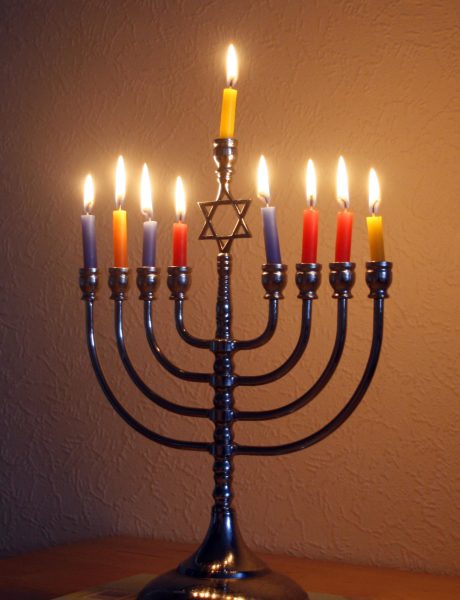
Resonating with their story, English teacher Alaina Kaplan who is Jewish looks forward to quality time with family during Hanukkah.
“This year, Hanukkah falls on a Sunday evening…day one begins on sundown. So it would be on the 14th at sundown. And so we like to light the first candle altogether as a family, and we’ll say a little prayer when we do that,” Kaplan said.
She adds, “We celebrate it for eight days, and we celebrate with fried food to signify the oil.”
Robotics teacher James Brown is also culturally Jewish, but unlike her he doesn’t follow the eight day candle lighting. Being Christian as well, he celebrates the holidays twice with different sides of the family. On Christmas Day with the Christian side, and Hanukkah with his Jewish side.
“There was a big joke in our family that we schedule Hanukkah because we can’t always get together during the eight days and nights of Hanukkah,” Brown said.
He stresses they prioritize finding a good time to celebrate for everyone, not following the exact dates and tradition for Hanukkah.
Also commemorating light, the Indian festival, Diwali, is celebrated on the darkest night or new moon of the Kartika, the Hindu lunar calendar. Dates may vary for different families, but Diwali is on Nov. 8 every year.
Junior Anna Bhalla traditionally spends multiple traditions and activities with her family for Diwali.
“We usually have a festival called Diwali, which is basically our version of Christmas celebrations. We light up diaz, which are kind of like candles throughout the night, and we eat a bunch of food and dance, and there’s also usually fireworks shows during these times,” Bhalla said.
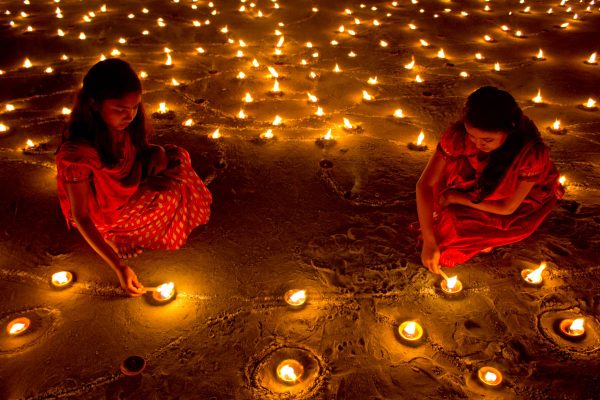
For these different holidays and different cultures, they still have parallels in celebration, as they all will include spending time together and feasting.
But for some, either cultural or religious reasons, they will not celebrate a holiday during the winter. Atheism, the act of not devoting to a god and religion, means they do not believe in religious holidays. So, although Christmas can be celebrated for secular reasons, atheist junior David Chen does not.
“Whenever there’s a holiday, we just eat a lot,” Chen said.
Chen does not traditionally celebrate Holidays following a routine, but still shares the same actions of feasting with family.
Whether or not there’s varying belief in meaning behind holidays, family and friends will use that extra day off to connect with each other and share time, drawing unity in all cultures.