Social media has grown rapidly with some popular sites such as TikTok, Instagram and X. Teenagers are primary users of these apps and spend a consistent amount of time on them, often before bed. This results in teens losing sleep and suffering from exhaustion, affecting relationships and school.
According to The Cleveland Observer, a community nonprofit newsroom, “From the early 2010s to now, the number of social media users has risen from 970 million to over 4.7 billion. With this upwards spike, the user breakdown also reveals that teenagers now represent the most users, at about 90%. Yet, when considering the decade prior, this percentage was only around 60%.”
According to the Social Media Center Law Center, a law firm that protects vulnerable people from social media companies, the reason teenagers continue to choose to spend their time on social media is that these algorithms target them and by manipulating their brain’s reward system making it addictive.
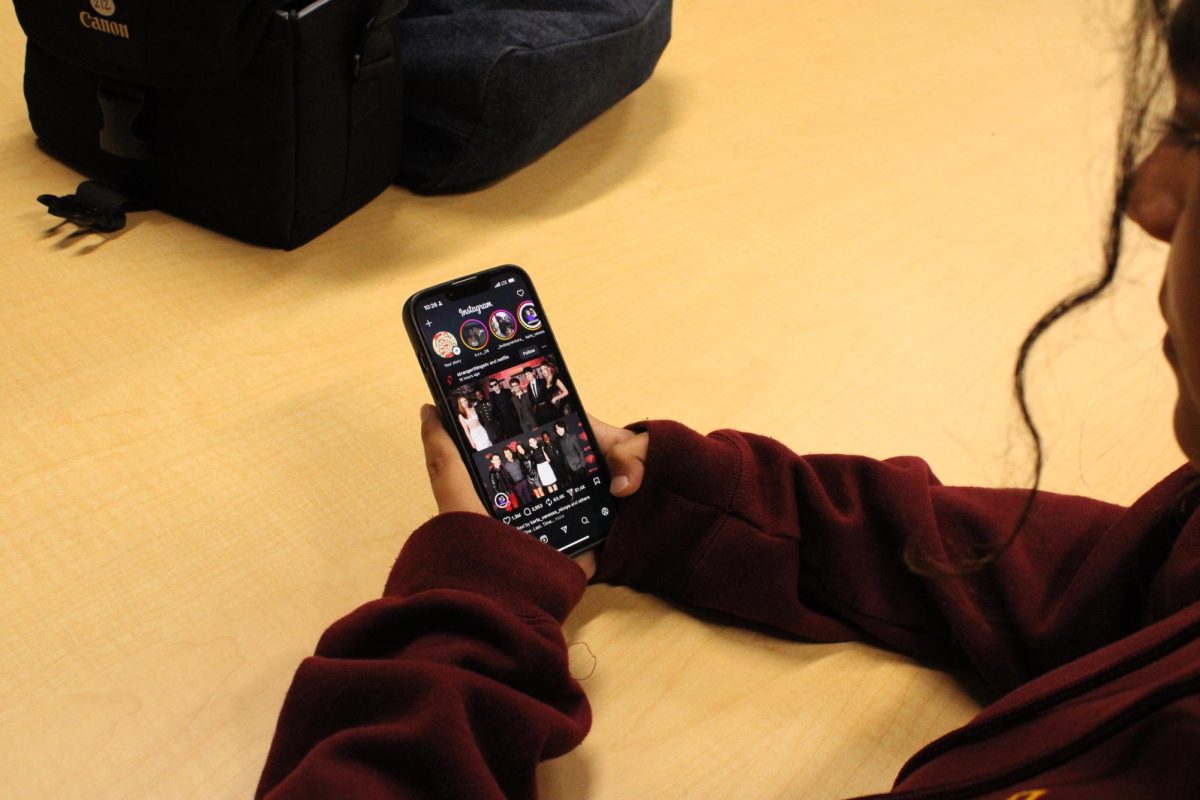
Not only do teenagers scroll on social media during school and free time, but they also choose to scroll on it before they go to bed, like Sophomore Keren Torres. According to Stanford Medicine, “More than half reported texting in the hour before they went to sleep, and these media fans were less likely to report getting a good night’s sleep and feeling refreshed in the morning. They were also more likely to drive when drowsy, the poll found.”
Torres scrolls through social media for around two hours before she goes to sleep and when she chooses to, she struggles to fall asleep for around half an hour. Staying up late causes her to lose focus at home and in school. However, she has chosen not to find a solution since she does not find it serious.
“I don’t think it’s ever gotten to that point, I don’t think I really let it get to that point,” Torres said.
Torres not only chooses to go on her phone before she goes to sleep, but also watches TV. This can extend the problem of sleep problems due to having devices with blue light, which convinces her body it’s daytime.
According to the Sleep Foundation, an independent organization that offers insight to improve sleep who have medical advisers that provide info, say “Studies show that 57% of teens who use technology in the bedroom suffer from sleep problems, and teens consistently report worse sleep when they have a television or small screen, such as a smartphone, in the bedroom.”
Staying on devices late at night is more dangerous for teenagers because the shape of pupils allows for blue light to pass through stronger.
This means that students who stay up late on social media or even doing homework are at risk of sleep deprivation and damage to their eyes, this is not the only negative effect of social media on teenagers’ sleep.
According to Yale Medicine, “Research shows a relationship between social media use and poor sleep quality, reduced sleep duration, and sleep difficulties in young people, according to Dr. Murthy’s advisory. For teens, poor sleep is linked to emotional health issues and a higher risk for suicide,” according to science direct.
Junior Ana Juarez scrolls on social media before she goes to bed and sometimes it keeps her up afterwards. Other than this she does not experience any negative effects such as being tired throughout the week and needing to take naps at inconvenient times. She thinks that the mental effects of social media interfere with her sleep if anything does.
“Probably just thinking about basically more on my look. It worries me how I present myself at school,” Juarez said.
Social media can create unrealistic expectations that teens feel that they need to measure up to, as well as FOMO.
According to Social Media Center Law Center “The fear of missing out, also known as FOMO, can prevent some teens from falling into a deep sleep because they feel the need to constantly check notifications, even during the night. FOMO drives some teens to sleep with their phones and awaken for every notification.”
Freshman Eval Faro has had trouble sleeping. When using social media she often ends up staying awake and scrolling. Faro also enjoys posting on social media and often sacrifices her sleep to stay up and make sure her posts are perfected, resulting in occasional missed homework assignments. She has recently tried fixing this, with strategies like scheduling posts and her parents helping her with manage her screen time.
“Sometimes I’ll get upset because no more Instagram ‘cause my parents say I have to do something,” Faro said.
According to Faro, her parents remove her phone to ensure that she stays on track. A more modern tool for parents to help their children avoid effects of social media on their sleep are parental control apps to limit screen time when they feel that their child cannot manage it on their own.
According to the Oxford Internet Institute “Digital tools that help parents enforce rules around screen time and their children’s online browsing habits, or help parents virtually accompany their child to and from school, promise to bring parents some much-needed peace of mind,”.
Teens struggle with getting an appropriate amount of sleep with the existence of social media and feeling like they need to spend their time on it. Some may be fine on their own to manage their screen time despite the algorithms that target them,. but other times they need help from parents to take away their phone or use an app to manage the apps they spend their time on.