Social media is widespread and accessible to teens now more than ever before because it is centralized to their social communication and allows for quick access to entertainment. It appears to give the youth individuality, yet it might push them to follow what people their age are doing, leaving little room for development of self-identity due to cycling trends and less real-life interactions.
Apps such as Instagram, X and TikTok create a sense of community, approval and connection with friends and family. Although it may be good to have these relationships, some teens start to isolate themselves due to feelings of missing out (FOMO) or the convenience of staying at home. Resulting in a disconnect to their real-life connections and opportunities to build social skills lost from screentime and online communications that replace face-to-face interactions.
Despite the choice to avoid social media, it is undeniable that its influence extends beyond the screen. Even those who do not choose to interact online are in some shape or form impacted by its trends, as an estimated 95% of youth from ages 13 to 17 engage with content daily, according to the U.S. Department of Health and Human Services (HHS), dedicated to enhance the health and well-being of all Americans.
“As kids, not everybody has a phone, so they get used to playing outside and talking with each other. But as soon as you get a phone, and the more time they spend on social media. The more time they feel connected with each other, which they are, but that’s only online,” junior Raysteven Guadron said.
(Lisa Ly)
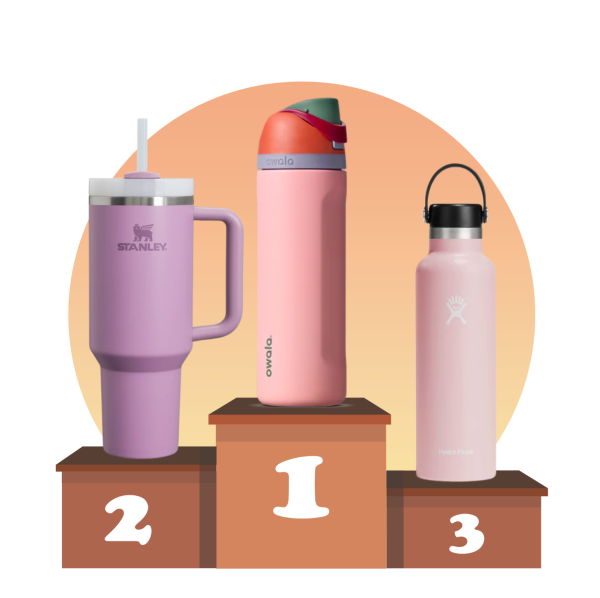
For example, the recent popularity of the Owala water bottles has replaced past trends, Stanleys and Hydro Flasks, because of its compactness, implementing a regular chug and sip cap that is compatible for both plastic and metal straws. The point being that social media has shaped the idea of people needing the best new item, influenced by the people around them as well as promotion on apps.
“It’s not negative because a lot of it’s not doing anything bad, just the idea of following something that’s cool and being part of it is kind of like a good idea…but at the same time, it’s kind of useless, I already have a cup… I even have a hydro flask I’ve been using for quite some time. So what’s the point of me buying one that has a handle?” Guadron said.
In the current digital age, trends rise and fall quickly from collectable trinkets such as Labubus to past fads like the dab. Tiktok is a platform meant to encourage originality in its users and creators, with a motto such as “Inspire Creativity & Bring Joy.” According to We Are TikTok, as a guide to the platform.
However, with most things that get popular, users follow what’s the latest and greatest to gain fame and favor of followers on the app in synchrony of recycled and reused trends instead of starting something new.
Yet platforms such as TikTok and others like it have made profound impacts in societal norms, expectations and interests. Trends such as blind boxes, dancing or even challenges, interactive competitions to the viewers, have become a constant cycle of quick-style content. Despite corporate claims of inspiring creativity and individualism, these trends unintentionally create a rising demand on youth to adapt.
“Not having social media. I’m not easily influenced. I would like to say, by certain trends. The only things I’m influenced by is my peers, so how I dress, to the stuff I buy,” senior Marissa Gutierrez said.
The large spread of teenage audiences provides companies, such as clothing brands, manufacturers and advertisements, with audience data and statistics to shape their businesses to sell what is popular for profit.
“I could see very quickly trends live and die in other people like how I said, Stanley’s have been a trend for like, the longest time, and the Labubus barely became a trend just recently,” Gutierrez said.
According to Harvard student agencies tutoring, a site that is directed by tutors and alumni who publish their academic papers, “The pressure to conform to online norms and the constant feedback loop of likes and comments significantly shape how adolescents perceive themselves.”
On the other hand, social media could be argued to have a positive impact such as kickstarting long-lasting friendships. “The ability to connect with people from different backgrounds and cultures can broaden their perspectives and enhance their social skills,” the same article stated.
Thanks to the new age of social media, it becomes easier to connect with various people around the world with just a click of a button, allowing teens to connect with people all over the world and be exposed to different cultures, perspectives and lifestyles they relate to or more different than what they see in their daily lives. Simultaneously developing new skills from online video tutorials, global awareness or self-expression through posts.
“For me personally, I just found it more easier to find communities that I can relate to. So it helped me find out my identity more than, maybe, if I didn’t have it and I would just struggle for years,” senior Victor Flores said.
Social media, whether teens are on it or off it, has a significant change in their individuality for the better and for worse. Despite trends on these apps being widespread it doesn’t necessarily mean social media dictates what a person’s preference is.